


For residents of Santa Rosa and the greater Sonoma County area, navigating the costs of cataract surgery in 2026 requires understanding the intersection of medical necessity, regional insurance adjustments, and rapidly advancing lens technology. Santa Rosa patients in particular may notice that costs and insurance coverage can differ slightly from those in other California regions due to local health plan contracts, a high concentration of independent ambulatory surgical centers, and the area’s higher average cost of living. The all-in cost for cataract surgery in Northern California can range from $0 to over $4,500 per eye. While the base procedure is a medically necessary surgery covered by Medicare and private PPO plans, the final price is largely dictated by your choice between standard functional vision and “refractive” upgrades designed to eliminate the need for glasses.
This guide provides a localized, transparent breakdown of 2026 facility fees, surgeon fees, and the long-term financial value of premium intraocular lenses (IOLs).
2026 Santa Rosa Cost Snapshot:
- Standard Surgery (Medicare + Supplement): Typically $0 out-of-pocket after meeting your annual deductible.
- Standard Surgery (Private PPO): Usually involves a 10–20% co-insurance, averaging $500–$800 per eye.
- Premium Lens Upgrades (Multifocal/Toric): An out-of-pocket “refractive” fee ranging from $1,500 to $3,500 per eye.
- Regional Facility Fees: Santa Rosa ambulatory surgical centers (ASCs) currently average $1,200–$2,200 for non-covered surgical portions.
The True Cost of Waiting: Why Delaying Surgery Can Be Expensive
Many patients in Santa Rosa hesitate to schedule surgery due to cost concerns, but delaying treatment for a visually significant cataract often leads to higher indirect costs. For example, we recently saw a Santa Rosa patient, a retiree who postponed cataract surgery for two years, hoping to avoid out-of-pocket expenses. During that time, she experienced two minor falls at home and needed to upgrade her bifocals twice, costing over $1,000 for specialty lenses and repairs. By 2026, clinical data suggests that untreated cataracts contribute to an increased risk of falls, vehicle accidents, and the constant need for updated (and expensive) prescription eyewear.
When a cataract is removed, the physical structure is replaced with a permanent lens that will never develop another cataract. Investing in surgery now is not just a medical decision; it is a long-term financial strategy to reduce the recurring costs of high-index glasses and prescription bifocals, which can average $500–$800 per year for high-quality pairs in the Bay Area.
Does Medicare Cover Cataract Surgery in Santa Rosa?
In 2026, Medicare Part B remains the primary coverage vehicle for cataract surgery in California. Because it is classified as a “medically necessary” procedure, coverage is robust, provided your cataracts meet specific visual acuity requirements (typically 20/40 or worse, or significant glare interference).
Understanding the 80/20 Rule
Medicare Part B typically covers 80% of the Medicare-approved amount for the surgeon’s fee and the facility fee.
The Gap:
If you do not have supplemental insurance, you are responsible for the remaining 20%.
The Supplement Solution
Most Santa Rosa patients with a Medigap (Supplemental) policy or a Medicare Advantage plan find that their out-of-pocket cost for standard surgery is nearly $0 after their Part B deductible is met. Common supplemental plans in the Santa Rosa area include Medigap plans such as Plan G and Plan N from providers like UnitedHealthcare (AARP), Blue Shield of California, and Anthem Blue Cross. Popular Medicare Advantage plans in the area include Kaiser Permanente Senior Advantage, SCAN Health Plan, and Humana Choice PPO. Checking your insurance card or contacting your provider will help you confirm which type of supplemental coverage you currently have or might qualify for.
What Medicare strictly EXCLUDES
Medicare is designed to restore “functional” vision. It does not cover technology that it deems “cosmetic” or elective. This includes:
- Femtosecond Laser Assistance (FLACS): Using a laser for incisions rather than a manual blade.
- Advanced Biometry: Specialized mapping used to calibrate premium lenses.
- Refractive Lens Upgrades: Lenses that correct for astigmatism or near-vision.
Premium IOLs: The Cost of Visual Freedom in 2026
The most significant factor in your final bill will be the type of intraocular lens (IOL) implanted. In 2026, the technology available at LaserVue Santa Rosa allows for unprecedented customization.
1. Standard Monofocal Lenses ($0 Upgrade Fee)
These lenses are covered by insurance. They provide excellent clarity at a single focal point (usually distance). However, you will almost certainly require reading glasses for computer work, smartphones, and menus.
2. Toric Lenses ($1,500 – $2,000 Upgrade Fee)
If you have astigmatism, a standard lens will leave your vision blurry without glasses. Toric IOLs are specifically engineered to neutralize astigmatism during the cataract procedure. In Sonoma County, this upgrade is one of the most popular choices for patients who want crisp distance vision for driving or golf.
3. Multifocal and EDOF Lenses ($2,500 – $4,000 Upgrade Fee)
Lenses like the PanOptix Trifocal or Vivity EDOF are designed to provide a “full range” of vision. These lenses reduce or eliminate the need for glasses entirely by creating multiple focal points. While the upfront cost is higher, the “cost per day” of clear vision over the next 20–30 years is remarkably low.
Comparing Santa Rosa Cataract Costs: 2026 Price Matrix
| Component | Standard (Insurance) | Premium Refractive |
| Surgeon Fee | $0–$500 (Co-pay) | $1,500 – $2,500 |
| Facility Fee | Covered by Insurance | $1,000 – $1,500 (Upgrade portion) |
| Lens Cost | Included | $1,000 – $2,500 |
| Total Out-of-Pocket | $0 – $800 | $2,500 – $4,500 |
Note: Prices reflect the average 2026 Sonoma County market rates at Ambulatory Surgery Centers (ASCs). Hospital-based surgery typically carries higher facility fees.
Hidden Factors: Facility Fees vs. Hospital Costs
Where you have your surgery in Santa Rosa matters.
- Ambulatory Surgery Centers (ASCs): Specialized eye surgery centers, like the one used by LaserVue, are generally more efficient and cost-effective.
- Hospital Outpatient Departments: Having surgery at a large hospital system often results in significantly higher facility fees—sometimes $1,000 to $2,000 more than an ASC for the exact same procedure.
At LaserVue, we provide a global quote. This ensures that the surgeon, anesthesia, and facility fees are bundled into a single transparent figure so patients aren’t surprised by multiple bills from different providers weeks after their surgery.
Financing and Payment Strategies
We recognize that $3,000 or $4,000 is a significant investment. Fortunately, there are several ways to make premium vision more accessible in the current economy.
1. HSA and FSA Accounts
We offer financing plans that allow patients to spread the cost of their premium lenses over 12 to 24 months. Most plans are subject to credit approval, and some options offer zero interest if paid in full within the promotional period. Other plans may offer low, fixed interest rates based on the term length and your credit profile. There are no hidden fees, and the application process typically takes only a few minutes. For many, this brings the cost of “visual freedom” down to approximately $150 per month, which is less than many monthly utility or cell phone bills.
2. CareCredit and Monthly Financing
We offer financing plans that allow patients to spread the cost of their premium lenses over 12 to 24 months. For many, this brings the cost of “visual freedom” down to approximately $150 per month, less than many monthly utility or cell phone bills.
3. The “Glass-Free” ROI
Consider the math: If you spend $600 every two years on new glasses, you will spend $3,000 over the next decade. A premium lens that lasts a lifetime can pay for itself in saved optical expenses alone.
Why Santa Rosa Prices Vary
If you see an advertisement for “Cataract Surgery for $999,” proceed with caution. Often, these “teaser” rates exclude the facility fee or use older-generation lenses. At LaserVue, we believe in total transparency. Our quotes are all-inclusive, using the latest 2026 technology, because we believe the “best price” is the one that includes a safe, permanent, and high-quality visual result.
Original Analysis: The 2026 Regional Outlook
The cost of living in Santa Rosa and the North Bay continues to influence medical pricing. While our facility and staffing costs are higher than in other regions, the concentration of world-class surgical talent at LaserVue means patients have access to trifocal and EDOF lenses that are often unavailable in smaller markets. When you choose a local specialist, you aren’t just paying for a procedure; you are paying for 2026-grade post-operative care and a surgical team that understands the active lifestyle of Sonoma County residents.
Ready for a Personalized Cost Breakdown?
Don’t let the complexity of insurance and lens options keep you in the dark. At LaserVue Eye Center, we specialize in helping Santa Rosa patients maximize their benefits while achieving the vision they deserve. Our patient coordinators will provide a transparent, line-by-line quote tailored to your specific insurance plan and visual goals.

Frequently Asked Questions
How much does cataract surgery cost without insurance?
In 2026, the self-pay rate for standard cataract surgery in Santa Rosa is approximately $3,500 per eye. This includes the surgeon, facility, and anesthesia fees.
Why is there an extra fee for laser-assisted surgery?
The femtosecond laser used in FLACS (Femtosecond Laser-Assisted Cataract Surgery) is an advanced technology that Medicare classifies as elective. It provides greater precision in incisions and lens fragmentation, especially beneficial for patients receiving premium lenses.
Is the initial evaluation covered by my insurance?
Yes, the diagnostic exam used to determine if you have cataracts is a standard medical visit. It is covered by your medical insurance (PPO or Medicare), though your standard specialist co-pay will apply.
Can I do one eye at a time to spread out the cost?
Absolutely. Most surgeons actually recommend doing eyes 1–2 weeks apart. This allows you to spread the payments for each eye if you are paying out of pocket for upgrades.
About LaserVue Eye Center
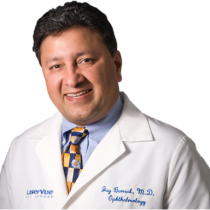
Serving Santa Rosa and San Francisco since 1996, LaserVue Eye Center is led by board-certified ophthalmologist Dr. Jay Bansal. Our team has performed thousands of cataract and refractive procedures, staying at the forefront of IOL technology to ensure our Bay Area patients receive the highest standard of care. Learn more about our team.