
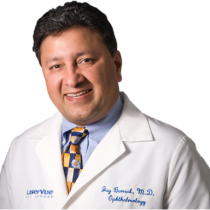


SMILE eye surgery offers a modern and minimally invasive solution. At LaserVue Eye Center, our mission is to help patients experience the world with renewed clarity and confidence.
With over 25 years of experience and more than 40,000 successful procedures, we take pride in leading the San Francisco Bay Area in advanced vision correction techniques such as LASIK, PRK, and SMILE (Small Incision Lenticule Extraction).
Many patients, however, share similar concerns before deciding on SMILE. Questions about safety, recovery, and effectiveness are completely normal. In this article, we’ll explore the four most common concerns about SMILE eye surgery, and how medical science and clinical expertise address each one.
What Is SMILE Eye Surgery?
SMILE, short for Small Incision Lenticule Extraction, is an innovative laser vision correction procedure approved by the U.S. Food and Drug Administration (FDA) in 2016. It corrects nearsightedness and astigmatism by reshaping the cornea through a tiny incision, using advanced femtosecond laser technology.
Unlike LASIK, SMILE does not involve creating a corneal flap. This makes it less invasive and reduces the risk of certain complications. The procedure is performed in minutes and offers rapid recovery with long-term visual stability.
According to the American Academy of Ophthalmology (AAO), SMILE has demonstrated high success rates and excellent safety outcomes in numerous clinical studies.
Concern 1: “Is SMILE Eye Surgery Safe?”
Safety is the number one question for most patients considering any form of vision correction. SMILE has proven to be one of the safest refractive procedures available today.
The precision of femtosecond laser technology eliminates the need for manual instruments. This reduces human error and ensures exceptional accuracy. Since the incision is smaller than in LASIK, there is also a lower risk of dry eye and postoperative discomfort.
Clinical studies published in the Ophthalmology Journal confirm that SMILE produces consistent, long-term vision improvement with minimal complications. Patients report high satisfaction rates, with most achieving 20/20 vision or better.
Concern 2: “Will SMILE Surgery Hurt?”
A common misconception is that laser eye surgery is painful. In reality, SMILE is virtually painless from start to finish.
Before the procedure, numbing eye drops are applied to prevent discomfort. Patients typically feel mild pressure during the laser application, but no sharp pain. Afterward, a slight sensation of dryness or irritation may occur, but it subsides within a few hours.
Recovery is typically smooth, with most patients returning to normal activities within one to two days. The corneal structure remains stable, making the healing process faster and more comfortable than older surgical methods.
Concern 3: “How Long Does Recovery Take?”
Recovery from SMILE is remarkably quick compared to other laser procedures. Most patients notice clearer vision within 24 hours.
The cornea heals rapidly because the incision is less than 4 millimeters. Patients can usually return to work and daily routines the following day. It’s important, however, to avoid rubbing the eyes or applying makeup for a few days after surgery.
Follow-up appointments are essential to monitor healing and ensure optimal results. The majority of patients achieve full visual clarity within one week.
Concern 4: “Are the Results of SMILE Permanent?”
Yes, the results of SMILE eye surgery are designed to be long-lasting. The procedure reshapes the cornea permanently, correcting the refractive error that causes blurred vision.
As with any surgery, natural aging of the eyes may affect vision over time. Conditions such as presbyopia or cataracts may occur later in life, independent of SMILE.
However, clinical research published in The Journal of Cataract and Refractive Surgery indicates that SMILE maintains stable vision for over ten years in most patients. It is considered one of the most durable laser correction treatments available today.
Who Is a Good Candidate for SMILE?
Candidates for SMILE should be over 21 years old, have stable vision for at least one year, and possess healthy corneas. The procedure corrects myopia (nearsightedness) and astigmatism effectively.
Those with severe dry eyes, thin corneas, or certain medical conditions may not be ideal candidates. A comprehensive eye examination determines eligibility.
Consultation with an experienced ophthalmologist ensures a personalized treatment plan tailored to each individual’s visual goals.
The Future of Refractive Surgery
SMILE represents the next generation of laser eye surgery. As technology evolves, outcomes continue to improve in precision, comfort, and recovery speed.
Ongoing studies by the American Society of Cataract and Refractive Surgery (ASCRS) highlight SMILE’s long-term success and patient satisfaction. It stands as a transformative option for individuals seeking visual freedom with minimal downtime.
Experience the Freedom of Clear Vision!
Vision correction is not just about sharper eyesight. It’s about enhancing your quality of life. Our skilled surgeons combine world-class expertise with advanced laser technology to deliver safe and effective results.
Take the first step toward clear, natural vision today. Schedule your SMILE eye surgery consultation now. Discover why thousands across the Bay Area trust LaserVue for their vision correction needs.
Frequently Asked Questions
1. What is SMILE eye surgery?
SMILE eye surgery is a minimally invasive laser procedure that reshapes the cornea to correct nearsightedness and astigmatism. It uses a femtosecond laser without creating a corneal flap. Recovery is fast, and results are highly stable.
2. How safe is SMILE eye surgery?
SMILE is an FDA-approved procedure with an excellent safety record. Clinical studies show high success rates and minimal complications. It’s considered one of the safest laser vision correction methods available.
3. Is SMILE eye surgery painful?
4. How long is the recovery period after SMILE?
Most patients experience clear vision within 24 hours. Full healing typically occurs within one week. Postoperative care ensures optimal results and comfort.
5. What are the benefits of SMILE compared to LASIK?
SMILE involves a smaller incision, reducing dry eye risk and recovery time. It also eliminates flap-related complications found in LASIK. Patients often return to normal activities sooner.
6. Are SMILE surgery results permanent?
Yes, results are designed to be long-lasting. The corneal shape remains stable for many years. Natural age-related vision changes may still occur later in life.
7. Who is eligible for SMILE eye surgery?
Ideal candidates are adults over 21 with stable vision and healthy corneas. An eye specialist confirms eligibility after comprehensive testing. Certain medical conditions may affect candidacy.
8. What risks are associated with SMILE surgery?
9. How soon can I drive after SMILE surgery?
Most patients can drive within 24 to 48 hours after surgery. Vision clarity improves rapidly during early recovery. Always follow your surgeon’s advice before resuming driving.
10. How does SMILE surgery improve quality of life?
SMILE provides freedom from glasses and contact lenses, improving convenience and confidence. Patients report clearer, more natural vision in all settings. It’s a lasting investment in visual health.