


While LASIK is an amazing procedure, it’s simply not the right fit for everyone. Many factors might make a LASIK alternative a better choice. Maybe you have naturally thin corneas or a very strong prescription. Perhaps you suffer from certain dry eye conditions. Our mission is to find the absolute best solution for your unique eyes.
Here at LaserVue Eye Center, we truly believe that everyone deserves the freedom of clear vision. We’re known for our expertise in advanced vision correction, including both LASIK and cataract surgery. Thousands of patients have trusted us to reduce or eliminate their need for glasses and contacts. We’ll carefully assess your eyes to ensure the safest and most effective results possible.
When Classic LASIK Might Not Be the Perfect Solution
LASIK is a popular procedure that reshapes your cornea to correct common refractive errors. These issues include nearsightedness and astigmatism. During the surgery, a thin, hinged flap is created on the cornea’s surface. Then, a laser reshapes the tissue underneath. Most people recover very quickly.
However, there are a few scenarios where your eye doctor might recommend an alternative. Corneal thickness is a big consideration. If your corneas are too thin, creating the flap might weaken the eye’s structure. Similarly, if your prescription is very high, too much tissue removal could pose a problem. Also, people in high-impact jobs, such as military service or contact sports, face unique risks. A flap-free procedure is often highly recommended to avoid any rare complications from eye trauma.
Excellent Surgical Alternatives to LASIK
Fortunately, there are fantastic LASIK alternatives available today. These procedures can deliver the same great result: the gift of seeing clearly. They are a true blessing for anyone who isn’t an ideal candidate for traditional LASIK.
PRK: The Flap-Free Vision Correction
PRK (Photorefractive Keratectomy) is a reliable, time-tested alternative. The main difference is that PRK doesn’t involve creating a corneal flap. Instead, the surgeon gently removes the very thin outer layer of the cornea. Then, the laser reshapes the underlying corneal tissue, just like in LASIK.
A clear, protective contact lens is worn while this outer layer naturally regrows. PRK is excellent for patients with thinner corneas. It completely eliminates any concern about flap complications. The initial recovery can be a little longer than with LASIK. But rest assured, your final vision clarity will be just as crisp.
SMILE: Minimally Invasive and Quick Recovery
SMILE (Small Incision Lenticule Extraction) is a cutting-edge, keyhole procedure. It’s mainly used to fix nearsightedness and astigmatism. A specialized laser creates a tiny piece of lens-shaped tissue inside the cornea. This piece, called a lenticule, is then pulled out through a very small incision.
By removing the lenticule, the cornea’s shape is corrected. Because the incision is so small, no large flap involved. Patients often experience less temporary dry eye afterward. This procedure also offers a very fast bounce-back time. Many athletes and active individuals prefer the SMILE technique.
ICL: The Implantable Contact Lens Solution
ICL (Implantable Collamer Lens) is a sophisticated option that avoids working on the cornea altogether. Think of it as a permanent contact lens placed inside the eye. The surgeon positions this tiny, flexible lens behind your iris. This is in front of your natural lens. ICL is fantastic for people with very high prescriptions.
It is also perfect for those whose corneas are too thin for laser procedures. The ICL provides incredibly sharp, high-definition vision. Plus, it is completely reversible if needed. A big bonus: it won’t cause or worsen chronic dry eye symptoms.
RLE: Lens Replacement for the Over 40 Crowd
RLE (Refractive Lens Exchange), also called Clear Lens Exchange, is very similar to modern cataract surgery. It involves removing the eye’s natural lens. We then replace it with a premium Intraocular Lens (IOL). RLE is a great option for fixing major farsightedness. It’s also ideal for treating presbyopia, the age-related loss of near vision.
This procedure is generally recommended for patients over 40 or 50. An added benefit is that it prevents future cataract development. We can use advanced lenses to correct vision at all distances.
Cataract Surgery: Restoring Your Clear, Bright World
As we age, a cloudy lens, or cataract, can significantly dull our vision. Things start to look blurry, faded, or dim. The only proven solution is to remove that cloudy lens. We replace it with a crystal-clear, artificial IOL. LaserVue Eye Center excels in advanced cataract surgery.
We use the latest technology, including laser-assisted techniques. Our advanced IOLs do more than just to correct cataracts. They can correct astigmatism, nearsightedness, and farsightedness. Our goal is to give you back that crisp, vibrant vision you remember.
Why Choose LaserVue Eye Center in the Bay Area?
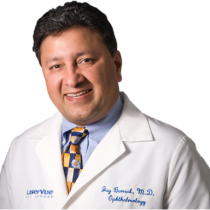
Choosing where to have your procedure is a huge decision. At LaserVue Eye Center, we set the standard for vision correction excellence. Our founder, Dr. Jay Bansal, has been dedicated to this work for over 25 years. Our skilled team has performed more than 40,000 successful vision procedures. This tremendous level of experience guarantees superior care and precision for you.
We only use the most advanced, FDA-approved technology available. Our commitment to your safety and the results is absolute. We never offer a one-size-fits-all solution. Instead, we customize your treatment plan based on your unique eye health and lifestyle. We make sure you know about all your viable options, not just LASIK.
Ready to Stop Dealing With the Hassle of Glasses and Contacts?
Your vision journey with us includes meticulous pre- and post-operative care. We are fully committed to delivering personalized, life-changing results. It’s time to find out which advanced vision correction option is truly the best fit for you.
Take the first step toward a life of crystal-clear vision. Call us now to book your visit and finally see the world clearly.
Frequently Asked Questions
1. What are the most common surgical alternatives to LASIK?
The most common surgical alternatives to LASIK are PRK, SMILE, ICL, and Refractive Lens Exchange (RLE). These procedures offer comparable visual outcomes and are suitable for patients who may not be ideal candidates for LASIK. PRK and SMILE are laser-based corneal procedures, while ICL and RLE involve placing an artificial lens inside the eye. The best option is determined after a comprehensive eye health examination.
2. How does PRK differ from traditional LASIK surgery?
PRK (Photorefractive Keratectomy) is a flap-free laser procedure used to reshape the cornea’s surface. Unlike LASIK, which requires creating a hinged flap, PRK removes the cornea’s outermost layer before laser treatment. This technique is often safer for individuals with naturally thin corneas or those in professions with a high risk of eye trauma. Although the initial recovery takes a few days longer, the final long-term vision achieved is identical to that of LASIK.
3. Is SMILE a good option for people who have dry eyes?
SMILE (Small Incision Lenticule Extraction) is often a better option for people concerned about post-surgical dry eye. The procedure involves a much smaller incision than LASIK, which minimizes disruption to the corneal nerves that control tear production. By disturbing fewer nerves, SMILE may lead to less temporary dry eye discomfort in the weeks following surgery. This makes it a preferred choice for individuals with pre-existing mild to moderate dry eye symptoms.
4. Who should consider an Implantable Collamer Lens (ICL) instead of a laser procedure?
The Implantable Collamer Lens (ICL) is ideal for patients with very high prescriptions or corneas that are too thin for laser surgery. The ICL is a removable, permanent lens placed inside the eye that works with the natural lens. Since it does not remove any corneal tissue, it preserves the eye’s natural structure and strength. This non-corneal approach provides superb high-definition vision, especially for severe nearsightedness.
5. Does Refractive Lens Exchange (RLE) treat both vision errors and cataracts?
Refractive Lens Exchange (RLE) is a two-in-one solution that treats refractive errors and prevents future cataracts. The procedure removes the eye’s natural lens, which would eventually become cloudy, and replaces it with an artificial Intraocular Lens (IOL). For patients over 40, RLE is highly effective for correcting moderate to severe farsightedness and presbyopia (age-related near vision loss). Since the cloudy lens is removed, a cataract cannot develop in that eye later in life.
6. Which alternative is recommended for patients with very high prescriptions?
The Implantable Collamer Lens (ICL) is typically the recommended alternative for patients with extremely high prescriptions. These high powers often exceed the safe limits for corneal ablation in procedures like LASIK or PRK. The ICL can correct a much wider range of vision errors, including severe nearsightedness up to $-20$ diopters. This technique corrects vision without compromising the cornea’s overall integrity or strength.
7. Are there any non-surgical alternatives to permanently fix vision?
No, there are no non-surgical methods that can permanently fix vision errors like nearsightedness or astigmatism. Options like prescription glasses and contact lenses provide a temporary, immediate correction that must be worn daily. Orthokeratology (Ortho-K) uses special contact lenses worn overnight to temporarily reshape the cornea, but the effect wears off quickly. Only surgical procedures can provide permanent correction by physically altering the eye’s optics.
8. Which alternative procedure has the fastest visual recovery time?
The SMILE procedure generally offers the fastest visual recovery time among the laser alternatives. Because its incision is very small, with many patients often experience functional vision and return to normal activities within 24 to 48 hours. ICL also provides very rapid visual improvement, often noticing clarity immediately after the procedure. PRK typically takes a week for the eye surface to fully heal and achieve clear vision.
9. Can I still get vision correction if my corneas are too thin for LASIK?
Yes, you have excellent vision correction options even if your corneas are too thin for LASIK. PRK is a reliable option because it avoids creating the corneal flap, maximizing the remaining tissue. The Implantable Collamer Lens (ICL) is also a viable option, as it does not require any corneal tissue removal. A thorough consultation will measure your exact corneal thickness to determine which non-LASIK option is safest for you.
10. Is the ICL procedure permanent, or can it be reversed later?
The ICL procedure is considered permanent in its corrective effect, but the lens itself is fully removable and reversible. A surgeon can safely remove the lens if necessary, making it the most reversible surgical option available. This flexibility offers a strong advantage over laser procedures, which permanently remove corneal tissue. The ICL provides a long-term solution with the assurance that the eye can be restored to its original condition.