


Vision is one of the most vital senses we possess. Yet, millions struggle daily with blurred or distorted sight caused by astigmatism. At LaserVue Eye Center, we understand the profound impact this condition can have on your quality of life. Our mission is to help patients achieve clear, sharp, and dependable vision through advanced technology and compassionate care.
Understanding Astigmatism
Astigmatism is a common refractive error affecting how light enters the eye. It occurs when the cornea or lens has an irregular shape, preventing light from focusing correctly on the retina. This irregularity results in blurred or distorted vision at all distances.
Unlike nearsightedness or farsightedness, which affect vision at specific ranges, astigmatism can make both near and far objects appear unclear. Most individuals experience some level of astigmatism, though it often goes undetected until an eye exam reveals it.
What Causes Astigmatism?
Astigmatism may be hereditary and present from birth. However, it can also develop after an eye injury, surgery, or certain conditions such as keratoconus; a progressive thinning of the cornea.
The cornea’s natural curve should resemble a perfectly round basketball. In astigmatism, it’s shaped more like a football, creating uneven light refraction. This shape distortion is what leads to visual imperfections.
Common Symptoms of Astigmatism
Individuals with astigmatism often experience symptoms such as:
- Blurry or distorted vision
- Eyestrain or discomfort
- Headaches after prolonged reading or screen use
- Difficulty seeing clearly at night
These signs may vary depending on the degree of astigmatism. A comprehensive eye exam is essential for accurate diagnosis and effective treatment.
Diagnosing Astigmatism
Our specialists use advanced diagnostic equipment to measure the curvature of your cornea and the focus of light within your eye. Tests such as corneal topography and refraction analysis help determine the severity and type of astigmatism you have.
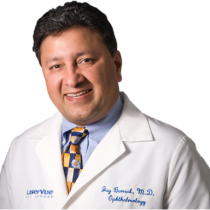
Our experienced ophthalmologists, led by Dr. Jay Bansal, ensure each patient receives a personalized assessment to determine the best corrective option.
Can Astigmatism Be Corrected?
Yes, astigmatism can be effectively corrected through several proven methods. The ideal treatment depends on the individual’s visual needs, corneal structure, and overall eye health.
1. Prescription Glasses and Contact Lenses
For mild astigmatism, eyeglasses or toric contact lenses can correct the irregular curvature of the cornea. These options adjust the way light focuses on the retina, improving vision clarity. However, they do not address the underlying cause of the irregular shape.
2. LASIK Surgery
LASIK (Laser-Assisted in Situ Keratomileusis) is one of the most popular treatments for astigmatism. This advanced laser procedure reshapes the cornea to allow light to focus precisely on the retina.
LaserVue Eye Center use wavefront-guided and bladeless LASIK technology, providing exceptional accuracy and safety. Our patients often achieve 20/20 vision or better, with minimal recovery time.
3. PRK (Photorefractive Keratectomy)
PRK is a suitable alternative for patients who may not qualify for LASIK due to thinner corneas. The procedure gently removes the outer layer of the cornea and reshapes it using an excimer laser. The result is a clearer vision without dependence on glasses or contacts.
4. Cataract Surgery with Toric Intraocular Lenses
For patients with both cataracts and astigmatism, Toric intraocular lenses (IOLs) provide dual correction. These premium lenses replace the cloudy natural lens during cataract surgery, offering improved vision at multiple distances.
Our center has performed over 40,000 successful vision correction procedures and remains a trusted name in the San Francisco Bay Area.
Conclusion
Astigmatism may seem like a lifelong burden, but with modern eye care solutions, clarity is within reach. Whether you’re considering glasses, contact lenses, or laser vision correction, LaserVue Eye Center offers trusted expertise and compassionate care. We are here to help you see life clearly again.
Take the first step toward visual freedom today. We pride ourselves on providing a personalized approach for every patient. From the first consultation to postoperative care, our focus is on safety, comfort, and superior visual results.
Experience the clarity you deserve.
See the world with the clarity you’ve always deserved. Schedule your free LASIK consultation at LaserVue Eye Center today and take the first step toward life in perfect focus. It’s time to open your eyes to a brighter, sharper future.
Frequently Asked Questions
1. What exactly is astigmatism, and how does it affect vision?
Astigmatism is a common refractive error caused by an irregular curvature of the cornea or lens. Instead of being perfectly round, the eye’s surface is shaped more like a football, which distorts how light focuses on the retina. This irregularity causes blurred or distorted vision at all distances. Many people are born with mild astigmatism, though it can also develop over time. It often results in eye strain, headaches, and difficulty focusing on fine details.
2. What are the main symptoms of astigmatism?
People with astigmatism commonly experience blurry or fuzzy vision, even when objects are close or far away. Headaches, squinting, and eyestrain after reading or screen use are also frequent complaints. Night driving can become especially challenging due to glare and halos around lights. Symptoms may vary depending on the degree and type of astigmatism. Regular comprehensive eye exams help detect and correct these visual disturbances early.
3. Can astigmatism be completely cured?
While astigmatism cannot always be “cured” permanently, it can be effectively corrected. Vision correction methods such as glasses, contact lenses, or laser eye surgery significantly reduce or eliminate its effects. LASIK and PRK reshape the cornea to allow light to focus properly on the retina. For those with cataracts, toric intraocular lenses can correct both cataracts and astigmatism at once. The goal of treatment is long-lasting clarity and improved visual comfort.
4. How do you know if you have astigmatism?
The only way to confirm astigmatism is through a comprehensive eye examination. Eye doctors use instruments like a keratometer and a corneal topographer to measure the curvature of your cornea. A refraction test determines how light enters your eyes, revealing refractive errors. Common signs like blurred vision, squinting, or frequent headaches can also indicate its presence. Early detection allows for effective and customized correction options.
5. What causes astigmatism to develop or worsen?
Astigmatism can be genetic and present at birth or acquired due to eye trauma, surgery, or diseases like keratoconus. The condition can change gradually over time, especially with age or environmental stress on the eyes. Poor visual habits, such as excessive screen use without breaks, may increase eye fatigue but don’t directly cause astigmatism. Corneal injuries or conditions that affect corneal shape are the main contributing factors. Regular checkups ensure that changes are managed early to prevent further distortion.
6. Is LASIK a safe option for correcting astigmatism?
Yes, LASIK is a safe and highly effective laser vision correction procedure for most people with astigmatism. It works by reshaping the cornea so that light can focus evenly on the retina. The procedure is fast, typically taking less than 15 minutes per eye, and recovery time is minimal. Most patients notice clearer vision within a day or two after treatment. However, a detailed eye evaluation is essential to determine if you’re a good candidate for LASIK.
7. Can children have astigmatism, and how is it treated?
Yes, astigmatism can occur in children and often goes undiagnosed if vision tests are not performed early. Symptoms such as squinting, eye rubbing, or poor performance in school may suggest a vision problem. Pediatric eye exams are crucial for detecting astigmatism and other refractive errors early. In most cases, children are treated with prescription glasses or contact lenses to improve vision clarity. Addressing the condition early supports better visual development and learning.
8. Can astigmatism worsen with age?
Yes, astigmatism can change or worsen over time as the eye’s shape naturally evolves. Aging may cause subtle corneal changes that affect how light enters the eye. For some people, this leads to increased dependence on corrective lenses. Eye conditions like cataracts can also alter vision and intensify astigmatism. Regular eye exams are vital for monitoring these changes and updating prescriptions as needed.
9. Can you correct astigmatism naturally without surgery?
While surgery offers a long-term solution, natural methods may help manage mild astigmatism. Eye exercises, proper lighting, and maintaining overall eye health can reduce visual strain. Eating a balanced diet rich in omega-3s, lutein, and vitamin A supports corneal health. However, natural remedies do not reshape the cornea or fully correct refractive errors. Professional treatment remains the most effective and reliable way to achieve clear vision.
10. What is the best treatment for astigmatism?
The best treatment depends on the type and severity of astigmatism, as well as individual eye health. Mild cases are often corrected with glasses or toric contact lenses designed for irregular corneal shapes. For long-term correction, laser procedures such as LASIK or PRK offer permanent reshaping of the cornea. Patients with cataracts benefit from toric intraocular lenses during cataract surgery. Consulting an experienced ophthalmologist ensures you receive a personalized treatment plan for optimal vision results.