

In 2026, the question isn’t just if you can get LASIK twice but whether your current corneal thickness and ocular health make a second procedure the safest path to clarity. If you are wondering whether you might be eligible for a LASIK enhancement, there are a few signs you can consider even before your consultation: Has your prescription remained stable for at least a year? Have you had a recent comprehensive eye exam? Is your vision blurring again after years of clarity? While only specialized testing can determine candidacy for sure, these indicators can help you decide when to seek an evaluation. At LaserVue Eye Center, we frequently treat patients in Santa Rosa and San Francisco who had their initial surgery over a decade ago and are now noticing the subtle return of blur or the onset of age-related vision changes.
This comprehensive guide serves as the definitive resource for understanding secondary refractive surgeries, the clinical limits of the human cornea, and the 2026 protocols that prioritize long-term eye health over quick fixes.
TL;DR — The Short Version:
- Yes, you can get LASIK twice, provided you have enough residual corneal thickness for a second treatment.
- Enhancements are usually performed 3 to 6 months after the first surgery if the initial target wasn’t hit, or years later if vision regresses.
- Corneal Mapping (Topography) is the “go/no-go” factor; we will not operate if the cornea is too thin or shows signs of instability.
- Alternatives like PRK or ICL are often better for “second-timers” with thin corneas.
- LaserVue’s “Lifetime Commitment” covers the cost of enhancements for qualifying patients.
Why Vision Changes Years After Surgery
LASIK permanently reshapes the cornea by removing microscopic amounts of tissue to change how light hits the retina. While the physical change to the cornea is permanent, the eye is a living organ that continues to evolve through the decades.
Factors Influencing Visual Regression
According to a 2025 study in the Journal of Refractive Surgery, approximately 3% of high-myopia patients experience a minor shift in prescription over a 10-year period. Understanding why this happens is the first step in determining if a second surgery is the right solution.
- Natural Aging (Presbyopia): Around age 45, the lens inside your eye stiffens. This is not a corneal issue but a lens issue. LASIK does not stop this process, which often leads patients to believe their LASIK has “worn off” when they actually need reading glasses.
- Myopic Progression: In some cases, the eye may physically lengthen slightly over a decade, leading to a return of nearsightedness. This is more common in patients who had their first surgery in their early 20s before their prescriptions had fully stabilized.
- Cataracts: Clouding of the lens can mimic the return of nearsightedness. A thorough exam at our Santa Rosa clinic is required to distinguish between corneal and lens-based changes.
- Corneal Healing: In a very small percentage of patients, the cornea’s natural healing response is more aggressive than predicted, leading to “over-healing” that slightly alters the final prescription.
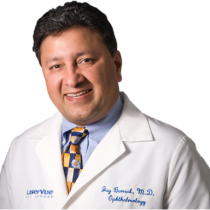
“We don’t call it ‘fixing a mistake.’ We call it ‘fine-tuning.’ For a small percentage of patients, the healing response of the cornea is more aggressive than predicted, requiring a minor enhancement to reach the 20/20 goal.” — Dr. Jay Bansal, Medical Director at LaserVue Eye Center.
Clinical Criteria for a Second LASIK Procedure
Before considering a second surgery, you must pass a “Structural Integrity Audit.”
1. Residual Stromal Bed (RSB)
The most critical factor is the amount of corneal tissue remaining under the original flap. The cornea has a finite amount of tissue. 2026 safety protocols require an RSB of 250-300 microns to prevent a condition called ectasia (corneal bulging).
2. Prescription Stability
Your prescription must be stable for at least 12 months. If your vision is still actively changing, surgery is a moving target and likely won’t provide a permanent result.
3. Flap Health and Imaging
We use high-resolution OCT (Optical Coherence Tomography) to visualize your original flap. If the original flap was created with an older microkeratome (blade), we often recommend PRK for the enhancement to avoid flap complications.
4. Tear Film Quality
Chronic dry eye can disqualify a patient for a second procedure. A second surgery can exacerbate tear film instability, so we often prescribe a 3-month tear-recovery protocol before approving an enhancement.
| Feature | Initial LASIK Surgery | LASIK Enhancement (Second Procedure) |
| Primary Goal | Correct primary refractive error | Correct minor residual blur |
| Tissue Removal | Significant (depending on prescription) | Minimal (microns) |
| Method | Create new corneal flap | Lift existing flap OR perform PRK |
| Typical Recovery | 24 hours | 24–48 hours (LASIK) or 5 days (PRK) |
| Eligibility | Broad (based on health/age) | Strict (based on residual tissue) |
Enhancement Options
If you are a candidate for a second procedure, we typically utilize one of two primary methods at our Santa Rosa surgical suite, depending on the age of your original surgery and your corneal thickness.
The Flap-Lift Technique
If your initial LASIK was relatively recent and your flap is healthy, the surgeon can gently lift the original flap and use the excimer laser to remove a microscopic amount of tissue.
- Pros: Same rapid recovery as the first surgery; minimal discomfort.
- Cons: Small risk of epithelial ingrowth (cells growing under the flap).
The “No-Flap” PRK Enhancement
For patients who had surgery 10+ years ago or have thinner corneas, we perform PRK (photorefractive keratectomy) on top of the existing LASIK flap.
- Pros: Considered the “Gold Standard” for safety in secondary procedures as of 2025 clinical updates from the American Academy of Ophthalmology. It preserves the most corneal strength.
- Cons: Longer recovery (3-5 days of blurriness) and mild discomfort during the healing phase.
Comparing LASIK Twice vs. Alternative Solutions
In 2026, we don’t just ask, “Can we do LASIK again?” We ask, “What is the best way to restore your vision?” Often, the answer is a different technology altogether.
Refractive Lens Exchange (RLE)
For patients over 45 who are experiencing regression along with presbyopia, RLE is often superior to a second LASIK. We replace the eye’s natural lens with a premium intraocular lens (IOL). This fixes the vision permanently and ensures the patient will never develop cataracts.
ICL (Implantable Collamer Lens)
If the cornea is too thin for a second laser treatment, an ICL, a tiny, biocompatible lens, can be placed inside the eye to correct high degrees of nearsightedness without removing any corneal tissue.
Monovision Enhancements
If your goal is to reduce reliance on reading glasses, we can enhance one eye for distance and the other for near vision, allowing the brain to blend the images for a full range of sight.
Safety and Risks of Secondary Procedures
While the overall safety profile of enhancements is high, there are specific considerations for “second-timers.”
- Epithelial Ingrowth: This occurs when surface cells grow under the lifted flap. While rare, it may require a minor “wash-out” procedure to resolve.
- Dry Eye Syndrome: Nerves in the cornea are disrupted during any refractive surgery. A second surgery can increase the risk of temporary or persistent dry eye.
- Overcorrection: Because the cornea has already been treated, its response to the laser can be slightly less predictable than the first time.
When You Should NOT Get LASIK Twice
At LaserVue, we prioritize long-term eye health. We may decline enhancement requests for the following reasons:
- Corneal Ectasia: Any sign of corneal thinning or bulging detected via Pentacam mapping.
- Insufficient Tissue: If the RSB is below 250 microns, the risk to the eye’s structure is too high.
- Unrealistic Expectations: If a patient expects 20/10 vision or perfect sight in all lighting conditions, an enhancement may not be the answer.
- Health Conditions: Uncontrolled diabetes or autoimmune disorders that affect healing.
“Patient safety is non-negotiable. If a second laser procedure puts the cornea at risk of instability, we pivot to IOL technology. Modern vision correction isn’t just about lasers anymore.” — Dr. Elizabeth Yeu, MD, speaking at the 2025 ASCRS Meeting.
Conclusion: The Path Forward
If your vision has changed years after your initial LASIK, you are not out of options. In 2026, we will have more tools than ever to restore your sight safely. The first step is a comprehensive evaluation at our Santa Rosa or San Francisco locations to map your cornea and determine the underlying cause of your vision change. To schedule your evaluation, you can call our office directly or fill out the online appointment request form on our website. Our team will follow up promptly to confirm your visit and answer any preliminary questions about the process.
Whether you are a candidate for a LASIK flap lift, a PRK enhancement, or a modern lens-based solution, our goal remains the same: providing the highest quality vision with the lowest possible risk.
Ready to Restore Your 20/20 Clarity?
At LaserVue Eye Center, we believe your vision correction should be a lifetime commitment. Whether you had your initial LASIK with us or at another practice decades ago, our Santa Rosa and San Francisco surgical teams are here to help you navigate your next steps with 2026’s most advanced diagnostic technology.

Frequently Asked Questions
How much does a second LASIK surgery cost in Santa Rosa?
If you had your initial surgery at LaserVue and qualify for our lifetime commitment, the enhancement is often covered. For patients from other practices, a secondary procedure in 2026 typically costs between $1,500 and $2,500 per eye, including advanced mapping and post-op care.
Is a second LASIK procedure riskier than the first?
Technically, there is a slightly higher risk of epithelial ingrowth during a flap lift. However, using modern PRK techniques for enhancements virtually eliminates this specific risk.
Can I get LASIK if I now need reading glasses?
LASIK does not stop the internal lens from aging. For presbyopia, we often recommend monovision LASIK or refractive lens exchange rather than a second LASIK procedure.
How long should I wait between LASIK surgeries?
We recommend waiting at least 3 to 6 months after the first surgery for it to fully stabilize before considering an enhancement. For long-term regression, we wait until the prescription has been stable for at least one year.
Will I be awake for the enhancement?
Yes, just like the first time, you are awake, but your eyes are numbed with drops. The laser portion of an enhancement usually takes less than 20 seconds.
See also: High-Prescription LASIK in Santa Rosa: What Are Your Options? | Custom Wavefront LASIK in Santa Rosa: What Makes It Different?
Author
Led by Dr. Jay Bansal, a pioneer in refractive surgery who has performed over 25,000 successful procedures. LaserVue Eye Center has been Santa Rosa’s leader in vision correction since 1996.
- Credentials: Board-Certified Ophthalmology, Fellowship Trained in Cornea and Refractive Surgery.
- Specialties: LASIK, PRK, Refractive Lens Exchange, and Cataract Surgery.