


Laser-assisted LASIK is an eye surgery that corrects refractive errors in your eye to provide you with clearer vision without the need for corrective eyewear. Since its FDA approval in 1999, millions of patients have chosen LASIK surgery, making it the most popular refractive surgery worldwide.
Our eye surgeons are equipped with the most advanced laser technology available and have decades of hands-on experience, making LaserVue Eye Center a premier LASIK provider in the Bay Area. With the incredible success and widespread popularity of the LASIK procedure, our surgeons are eager to answer all of your questions and make your journey to better vision as comfortable and simple as possible. One of the most common questions our ophthalmologists receive from patients is, “How long does LASIK last?” or “Is LASIK permanent?”
If you are considering LASIK eye surgery and are wondering something similar, this guide is for you. Read on to learn more about the long-term effects you can expect after LASIK and how this procedure can permanently correct blurry vision caused by refractive errors.
Understanding How LASIK Laser Eye Surgery Works
To understand the effectiveness of LASIK eye surgery, it’s important to understand how it corrects your vision. The LASIK procedure involves creating a thin (100 microns) flap in your cornea using a state-of-the-art excimer laser design specifically to ensure the success and safety of refractive surgery.
Once the corneal flap has been created, your surgeon then uses a laser to painlessly reshape your, cornea correcting the refractive error. The shape of your cornea will now properly reflect light entering your eye, giving you clear vision without the need for prescription lenses.
The Permanence of LASIK Eye Surgery Results
The effects of LASIK eye surgery are permanent. The physical changes made to the cornea’s shape can never be reversed after the procedure is completed. However, laser vision correction may regress over time, depending on certain factors such as age, how big the treatment was, and corneal biomechanics. The rate of regression is about 2-6% over 10 years, with a higher risk of regression for higher treatments.
If regression occurs, enhancements can be considered on a case-by-case basis. Many patients enjoy the benefits of LASIK for 10-20 years or more! If you have received LASIK at any age and begin to notice changes in your vision, you should contact your eye doctor immediately.
When a LASIK Enhancement Procedure May Be Necessary
LASIK is approved by the FDA for patients as young as 18. Any LASIK procedure performed on patients younger than 18 would be considered off-label and highly ill-advised. This is because a younger patient’s vision prescription has not yet stabilized, and they may require additional treatment or LASIK enhancement to achieve their best vision.
Considering an Enhancement After LASIK
In the rare case of undercorrection (0.5%), where our goal is not met, a follow-up procedure known as a LASIK enhancement, or LASIK touch-up, may be performed to correct any residual refractive error. This is most common in patients whose vision prescription has not stabilized enough prior to their procedure.
In order to qualify for the LASIK procedure, the LaserVue ophthalmologists monitor your eye’s changing state with pre-screening exams to ensure you will not need any enhancement. Our advanced Wavefront-guided LASIK technology further reduces the risk of requiring a LASIK touch-up.
Contact LaserVue Eye Center to Learn if LASIK is Right for You During a Free Consultation

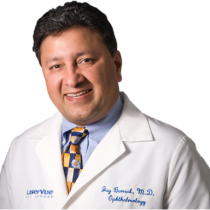
At LaserVue Eye Center, our ophthalmologists are board-certified. Our team is dedicated to the research and practice of advanced vision correction, and our leading eye surgeon, Dr. Bansal, has performed over 25,000 successful LASIK procedures.
If you are exploring your laser eye surgery options or have previously received LASIK surgery and are now experiencing vision changes, contact us online to schedule a complimentary consultation.
Frequently Asked Questions
1. How long does the vision correction achieved by LASIK surgery actually last?
The refractive correction achieved during LASIK is permanent and lasts a lifetime. LASIK reshapes your cornea, and once healed, the shape remains stable indefinitely. The positive visual changes you experience immediately after surgery are not temporary. This procedure is recognized for delivering durable and lifelong vision improvements.
2. Will my vision return to being blurry many years after my LASIK procedure?
The actual LASIK correction itself typically does not wear off or revert. The structural change to the cornea is stable and permanent. If your vision changes years later, it is usually due to natural aging processes. These changes are commonly associated with the development of presbyopia or cataracts, not with LASIK failure.
3. Can I expect to need a LASIK enhancement or “touch-up” procedure in the future?
A small percentage of patients, about 5-10%, may require an enhancement to maintain optimal results. This need usually arises within the first year after the initial surgery. Needing an enhancement many years later is much less common. Enhancements are generally quick procedures performed if the initial correction slightly regresses.
4. Does LASIK surgery prevent the need for reading glasses as I get older?
No, LASIK does not prevent or cure presbyopia, which is the age-related difficulty in seeing close-up. Presbyopia occurs because the eye’s natural lens loses flexibility, a process unrelated to the cornea. People typically start needing reading glasses around age 40 to 45. Some specific surgical techniques, like monovision LASIK, can temporarily reduce this need
5. What is the typical age range when vision changes might occur after successful LASIK?
The most common vision change after age 40 is presbyopia, which affects everyone regardless of LASIK. Other changes, such as the gradual development of cataracts, generally begin after age 60. These later changes are part of the natural aging process of the eye’s internal lens. They do not indicate a failure of the initial, permanent LASIK correction.
6. How does aging affect my eyes if I have already undergone LASIK?
Aging affects all eyes, including those that have had successful LASIK. The LASIK-corrected cornea remains stable and functional over time. However, the internal lens will harden, leading to presbyopia or cataracts in later life. If cataracts form, they can be treated with standard cataract surgery procedures. Your eye doctor will monitor these natural, age-related changes annually.
7. Is it true that the effects of LASIK only last for about 10 years?
No, the idea that LASIK only lasts 10 years is a common misconception. The laser correction is designed to be permanent, stabilizing your prescription indefinitely. Any necessary vision correction after 10 years is usually due to the progression of natural aging. The long-term safety and stability of the procedure are well-documented in clinical studies.
8. If my vision prescription slightly changes years later, what are my options?
If a minor prescription change occurs, the first option is often to get updated glasses for specific tasks. For many, the change is small enough that no action is necessary. A specialist can evaluate whether a simple, quick LASIK enhancement procedure is suitable. For changes related to cataracts, cataract surgery would be the appropriate solution.
9. Can chronic conditions like diabetes affect the long-term results of LASIK?
Yes, certain chronic health conditions can potentially affect the stability of results. Diabetes must be well-controlled both before and after LASIK for optimal stability. Hormonal changes, such as those during pregnancy, can also temporarily alter your vision. Discussing your full health history with your surgeon is crucial for long-term prognosis.
10. Does the technology used for my LASIK procedure impact how long the results will last?
Modern LASIK technology, including custom wavefront and femtosecond lasers, ensures high-precision corrections. This high precision maximizes the chance of achieving long-term stability and 20/20 vision. While technology improves precision, the permanence of the corneal reshape is inherent to the LASIK procedure itself. Choosing an experienced surgeon and a modern platform supports the best possible long-term outcome.