



Choosing the right intraocular lens (IOL) is one of the most important decisions in your vision correction journey. Whether you are preparing for cataract surgery or considering clear lens replacement, your choice of IOL directly impacts the quality of your vision. With today’s advancements in ophthalmology, patients can enjoy lenses tailored to their unique vision goals and lifestyles.
At LaserVue Eye Center, we believe everyone deserves the freedom of clear, natural vision. Serving the San Francisco Bay Area for over 25 years, our specialists have performed more than 40,000 successful vision correction procedures. In this comprehensive guide, we’ll help you understand your IOL options and how to select the best one for your specific needs.
Understanding Intraocular Lenses (IOLs)
An intraocular lens (IOL) is a small, artificial lens that replaces the eye’s natural lens during cataract or lens replacement surgery. It helps focus light precisely on the retina, resulting in clear, sharp vision. Unlike the natural lens, an IOL will not become cloudy or develop cataracts.
There are several types of IOLs, each designed to correct different visual conditions. According to the American Academy of Ophthalmology (AAO), choosing the right IOL depends on your prescription, lifestyle, and visual expectations. The right lens can eliminate or greatly reduce dependence on glasses or contact lenses after surgery.
The Importance of Choosing the Right IOL
Selecting the right type of IOL determines your visual outcome after surgery. Each lens type offers different advantages, such as improved near vision, distance vision, or both. The goal is to provide the clearest possible vision across all distances, tailored to your daily life.
Factors such as age, occupation, and existing eye conditions influence your choice. Discussing your expectations with your ophthalmologist ensures a customized solution. A well-chosen IOL can significantly enhance your independence and overall quality of life.
Types of Intraocular Lenses
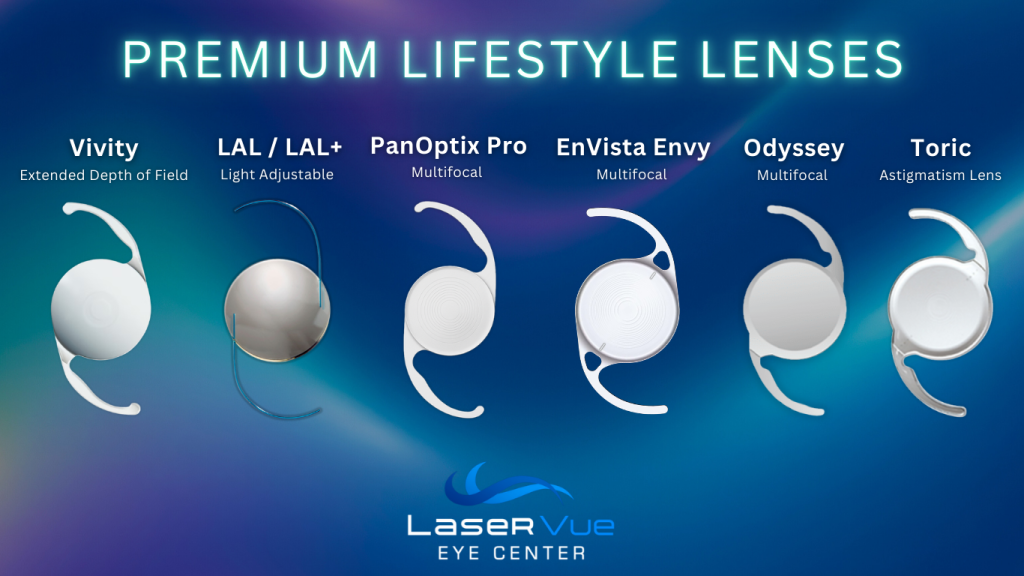
There are several main categories of IOLs available today, each offering distinct visual benefits. Understanding their differences helps you make an informed decision with your eye surgeon. Below are the most common IOL options used in modern vision correction surgery.
Monofocal IOLs
Monofocal lenses are the most commonly used and provide excellent clarity for a single focal distance. Usually distance vision. Patients typically need reading glasses for near tasks after surgery. These lenses are covered by most insurance plans and deliver consistent, reliable results.
Monofocal IOLs are ideal for patients who prioritize sharp distance vision, such as drivers or outdoor enthusiasts. They remain a trusted choice for those seeking simplicity and proven effectiveness.
Multifocal IOLs
Multifocal IOLs provide clear vision at multiple distances, near, intermediate, and far, reducing the need for glasses or contacts. These lenses use advanced optical technology to distribute light for different focal points. They are especially beneficial for active individuals who prefer visual freedom in daily activities.
Patients may experience mild glare or halos initially, which usually improve over time. Multifocal IOLs offer a convenient, long-term solution for those seeking complete spectacle independence.
Toric IOLs
Toric intraocular lenses are specifically designed to correct astigmatism. Astigmatism occurs when the cornea or lens has an irregular curvature, causing blurred or distorted vision. Toric IOLs neutralize these imperfections, producing clearer and sharper vision at all distances.
According to the National Eye Institute (NEI), toric lenses are highly effective in delivering crisp vision for patients with moderate to high astigmatism. They greatly reduce dependence on prescription glasses after surgery.
Accommodating IOLs
Accommodating IOLs mimic the natural focusing ability of the human lens. They move slightly inside the eye in response to muscle contractions, allowing patients to see clearly at different distances. This type of lens is ideal for people who value smooth transitions between near and far vision.
Although accommodating lenses may not provide as strong near vision as multifocal lenses, they deliver more natural, dynamic focusing. Most patients experience minimal glare or halos, enhancing comfort during night vision.
Extended Depth of Focus (EDOF) IOLs
Extended Depth of Focus (EDOF) lenses are the newest innovation in lens technology. They create a continuous range of vision from near to far, minimizing visual gaps. EDOF lenses reduce issues such as glare and halos common with multifocal lenses.
They are ideal for patients who want balanced, natural vision without frequent use of glasses. These lenses are often chosen by individuals seeking clear intermediate vision for activities like reading or computer use.
How to Choose the Best IOL for Your Needs
Choosing the right IOL starts with understanding your vision goals. If you spend significant time reading, working on computers, or driving at night, your lifestyle preferences should guide your choice. Your ophthalmologist will evaluate your corneal shape, prescription, and general eye health.
Discuss whether you prefer total independence from glasses or are comfortable using them occasionally. Factors such as pupil size, eye anatomy, and visual demands help determine the ideal lens type. Personalized consultations ensure that the selected IOL aligns perfectly with your vision expectations.
What to Expect Before and After Surgery
Before surgery, your surgeon will perform detailed eye measurements to determine the appropriate IOL power. You’ll receive instructions to prepare for the procedure, which is typically performed on an outpatient basis. The surgery takes about 15 to 30 minutes per eye under local anesthesia.
After surgery, most patients notice clearer vision within a few days. Recovery is quick, with minimal discomfort or downtime. Following post-operative care instructions ensures optimal healing and long-lasting results.
Long-Term Benefits of IOL Implants
Modern intraocular lenses are designed for lifelong performance. Once implanted, they require no maintenance and remain clear indefinitely. Unlike natural lenses, IOLs cannot develop cataracts, making the results permanent.
Patients often report enhanced color perception, sharper contrast, and improved visual stability. With proper care and regular eye exams, the benefits of IOL surgery can last a lifetime.
The Future of Vision Correction with IOLs
Ophthalmic technology continues to evolve, offering more sophisticated and personalized IOL options. Advances in optical design and materials have improved visual outcomes and reduced side effects. Surgeons can now tailor lens choices to meet each patient’s lifestyle and visual priorities.
According to ongoing research from the American Society of Cataract and Refractive Surgery (ASCRS), next-generation IOLs may soon adapt automatically to changing visual conditions. The future of IOL technology promises even greater clarity, flexibility, and customization.
Ready to Discover Your Perfect Vision Solution?
Experience personalized eye care at LaserVue Eye Center, where clarity meets precision. Serving the San Francisco Bay Area for over 25 years, our expert surgeons have performed more than 40,000 successful procedures using advanced lens technology. Whether you’re considering cataract surgery or vision correction, we’ll help you choose the ideal IOL for your lifestyle. Schedule your consultation today. See the world with confidence, clarity, and freedom.
Frequently Asked Questions
1. What is an intraocular lens (IOL)?
An intraocular lens (IOL) is an artificial lens implanted in the eye during cataract or lens replacement surgery. It replaces the cloudy natural lens to restore clear vision. IOLs are made from durable, biocompatible materials. They come in different designs for specific vision needs. Once implanted, the IOL provides long-lasting clarity and stability.
2. How do I know which IOL is right for me?
Choosing the right IOL depends on your lifestyle, visual goals, and eye health. Your ophthalmologist will perform detailed tests to assess your vision needs. Monofocal lenses suit distance vision, while multifocal and EDOF lenses reduce the need for glasses. Patients with astigmatism often benefit from toric IOLs. A personalized consultation ensures the best visual outcome.
3. What is the difference between monofocal and multifocal IOLs?
Monofocal lenses correct vision at one distance, usually for far sight. Multifocal lenses provide clear vision at multiple distances. Multifocals help reduce the need for reading glasses. Monofocals are simpler and often covered by insurance. The right choice depends on your visual priorities and daily activities.
4. What are toric IOLs used for?
Toric IOLs correct astigmatism by compensating for irregular corneal curvature. They deliver sharper, more precise vision for patients with distorted focus. These lenses minimize dependence on prescription glasses. They can be combined with other corrective features for added clarity. Patients experience improved distance and intermediate vision after implantation.
5. What are the advantages of EDOF lenses?
Extended Depth of Focus (EDOF) lenses provide continuous vision from near to far. They reduce glare and halos common with multifocal lenses. EDOF lenses offer smoother transitions between visual ranges. They are ideal for people who work on computers or read frequently. Patients enjoy natural, balanced vision with minimal visual disturbances.
6. Are premium IOLs worth the cost?
Premium IOLs offer broader vision correction and greater independence from glasses. While they cost more than standard lenses, they provide long-term value. Patients gain improved quality of life and visual freedom. Many consider the investment worthwhile for permanent clarity. The right premium lens can enhance both comfort and confidence.
7. How long do intraocular lenses last?
Intraocular lenses are designed to last a lifetime. They do not wear out or require maintenance. The material remains clear and stable indefinitely. Patients can expect consistent visual performance for decades. Regular eye exams ensure continued eye health after surgery.
8. Can IOLs correct presbyopia?
Yes, multifocal and accommodating IOLs are designed to correct presbyopia. They restore the ability to focus at multiple distances. Patients regain near and intermediate vision without reading glasses. These lenses replicate the natural focusing ability of the human eye. The result is clearer, more flexible sight for everyday tasks.
9. Is IOL surgery safe?
IOL implantation is one of the safest surgical procedures worldwide. It uses precise technology and advanced sterile techniques. Complications are rare and usually minor. Most patients recover quickly with excellent vision. Choosing an experienced surgeon ensures optimal safety and results.
10. How soon will I see results after IOL surgery?
Most patients notice improved vision within 24 hours. Full stabilization usually occurs within one to two weeks. Temporary dryness or light sensitivity may occur early on. Proper aftercare and follow-up visits enhance recovery. Clear, stable vision is achieved soon after healing completes.