


Isn’t it amazing how much we rely on our vision? It’s what lets us enjoy everything the beautiful San Francisco Bay Area has to offer. But for so many people, that clarity is constantly interrupted by blurry vision, and that’s usually due to a condition called refractive error. It can be frustrating, but the good news is that these are very common and very treatable!
Here at LaserVue Eye Center, we firmly believe everyone deserves that crisp, clear, unobstructed view of the world. That’s why we focus on advanced solutions to correct these errors, helping you finally ditch those glasses and contacts. Let’s dive into exactly what these vision challenges are and how our modern techniques can change the way you see everything.
What Causes Refractive Errors?
Refractive errors occur when there is a mismatch between your eye’s corneal power and length, which prevents light from focusing correctly on your retina. When light is focused too far in front of or behind your retina, the image to your brain becomes distorted and out of focus.
Scientific research shows that genetics plays the biggest role in the development of refractive errors. They are typically inherited as a genetic trait from your biological parents and can be present at an early age.
Refractive errors can also develop as a result of an eye injury, surgery, and other eye conditions such as keratoconus, which causes your cornea to gradually thin over time.
What Are The Most Common Types of Refractive Errors?
Myopia (Nearsightedness)
Myopia, or more commonly known as nearsightedness, occurs when the eyeball is too long or the eye’s cornea is too curved. This causes light to converge to a focal point before it reaches the retina, causing anything in the distance to appear blurry.
Hyperopia (Farsightedness)
On the other hand, hyperopia, or farsightedness, occurs when the eyeball is too short or the cornea is too flat. The light is focused behind the retina, blurring near vision.
Astigmatism
Astigmatism is a result of the eye’s cornea having a more drastic curve in one direction, similar to the shape of an egg. Like hyperopia and myopia, astigmatism refracts and distorts light, resulting in multiple focal points that don’t properly reach the retina. Those suffering from astigmatism generally have poor distance and near vision.
Presbyopia (Age-related farsightedness)
As you age, your eye’s natural lens becomes harder and less flexible. Eventually, your lens reaches a point where it can no longer bend or focus light well enough, causing your near or close-up vision to become blurry. This is why it becomes more difficult to read and see things up close as we get older.
How Do You Fix Refractive Errors?
Regular eye exams allow opthamologists to evaluate the overall health of your eyes and screen for conditions that can affect the quality of your vision. Thankfully, refractive errors are easy to diagnose and can be corrected in various ways.
Corrective Eyewear

Refractive errors are most commonly treated with corrective eyewear such as glasses or contact lenses. After receiving an eye exam, your eye doctor can provide you with prescription lenses designed specifically for your refractive error.
Scheduling regular eye exams is important for your vision quality, as your prescription changes and refractive errors worsen with age.
Refractive Laser Eye Surgery
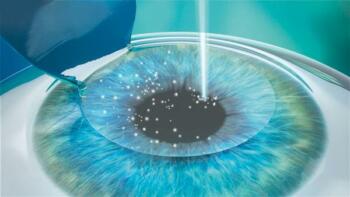
Refractive laser eye surgery, such as LASIK, offers patients a more permanent solution to corneal refractive errors. The eye surgeons at LaserVue Eye Center use advanced laser technology to physically reshape your cornea, improving its ability to focus the light on your retina.
SMILE is a pain-free, cutting-edge refractive laser eye procedure to correct myopia in a matter of seconds in a less invasive, one-step procedure. LaserVue is proud to be the first laser vision correction center in Northern California to offer the Zeiss VisuMax laser for SMILE Laser Vision Correction.
PRK is the refractive laser eye surgery option for patients with thin or irregularly shaped corneas that may not be suitable for LASIK. The PRK procedure removes a small portion of the cornea’s epithelium, the topmost layer, to reshape the layers beneath. The epithelium grows back over the course of three to four days following the procedure.
Refractive Lens Exchange
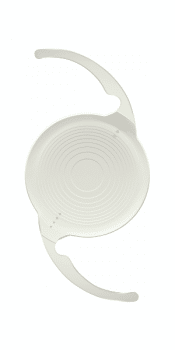
In some cases, when refractive errors are especially extreme, refractive lens exchange may be an ideal option. This highly precise surgical procedure exchanges the eye’s natural lens with an artificial intraocular lens (IOL) that properly focuses light and restores your vision.
With today’s IOL technology, this option not only corrects refractive errors but also helps prevent vision problems such as presbyopia and cataracts from developing later on in life.
Contact LaserVue Eye Center to Learn More About Refractive Errors and Your Treatment Options Today
At LaserVue Eye Center, our ophthalmologists specialize in diagnosing and treating a wide range of vision issues, including moderate to severe refractive errors. The first step to correcting a refractive error is as simple as receiving a comprehensive eye exam. Our eye doctors use the most advanced technology available to ensure refractive errors are corrected appropriately for each patient.
If you have experienced recent changes in your vision or have questions or concerns about your current vision prescription, contact LaserVue Eye Center today to schedule a comprehensive eye exam.
Frequently Asked Questions
1. What is the fundamental definition of a refractive error in the human eye?
A refractive error occurs when the eye cannot properly focus light onto the retina, which is necessary for clear vision. This happens because the shape of the eye, particularly the cornea or the lens, is slightly abnormal. Consequently, light is bent or refracted incorrectly, causing the image to appear blurry or distorted. Refractive errors are the most common cause of vision problems worldwide.
2. How does the refractive error known as myopia (nearsightedness) affect vision?
Myopia, or nearsightedness, occurs when the eyeball is too long or the cornea is too steeply curved. This causes light to focus in front of the retina instead of directly on it. People with myopia see nearby objects clearly, but distant objects appear fuzzy and out of focus. It is one of the most common refractive errors corrected by glasses or LASIK.
3. What causes hyperopia (farsightedness), and how does it impact visual clarity?
Hyperopia, or farsightedness, happens when the eyeball is too short or the cornea is too flat. In this condition, light theoretically focuses behind the retina rather than on its surface. While severe hyperopia blurs both near and far objects, milder cases usually only cause difficulty seeing things up close. This condition often leads to eye strain, especially during reading or detailed work.
4. What structural issue in the eye causes the refractive error known as astigmatism?
Astigmatism occurs when the cornea or the lens has an irregular, football-like curve rather than a smooth, spherical shape. This irregular curvature causes light to scatter, resulting in multiple focus points on the retina. The primary symptom is uniformly blurred, stretched, or distorted at any distance. Astigmatism frequently occurs alongside both myopia and hyperopia, making it a common complex error.
5. What is presbyopia, and how is it different from other common refractive errors?
Presbyopia is an age-related focusing problem that typically begins around the early to mid-forties. Unlike myopia or hyperopia, it is caused by the eye’s natural lens losing its flexibility and hardening over time. This makes it increasingly difficult for the eye to change focus between far and near objects. Presbyopia requires reading glasses or bifocals to see small print clearly.
6. How do prescription eyeglasses effectively correct different types of refractive errors?
Eyeglasses use custom-ground lenses that are designed to precisely bend (refract) light before it enters the eye. These lenses compensate for specific imperfections in the cornea or lens, such as those that cause myopia or hyperopia. The goal is to ensure that the light ultimately lands exactly on the retina’s surface. Eyeglasses are a simple, non-invasive, and highly effective way to manage almost any refractive error.
7. In what way do contact lenses work to correct a refractive error?
Contact lenses function similarly to eyeglasses by providing a corrective lens to properly focus light. However, they rest directly on the eye’s tear film and move with the eye. This direct contact offers a wider field of view without the obstruction of spectacle frames. Contact lenses must be properly fitted by an optometrist to ensure comfort, focus, and eye health.
8. How does LASIK laser surgery correct refractive errors permanently?
LASIK permanently corrects refractive errors by utilizing a specialized laser to precisely reshape the cornea. By altering the cornea’s curvature, the surgeon changes how light enters the eye. This procedure ensures that light is accurately focused onto the retina without the need for glasses or contacts. LASIK is a highly successful solution for myopia, hyperopia, and astigmatism.
9. Can a person have more than one type of refractive error at the same time?
Yes, it is very common for people to have multiple refractive errors at the same time. For instance, an individual might have both myopia (nearsightedness) and astigmatism. The corrective power in their glasses or contacts addresses both of these errors at once. The severity and combination of errors determine the complexity of the required correction.
10. What diagnostic tools are used to accurately measure and determine a refractive error?
Eye care professionals use several tools to accurately measure refractive errors during an eye exam. An autorefraction machine provides an initial objective estimate of your prescription. A phoropter allows the doctor to refine the prescription based on your subjective feedback (e.g., “Which is clearer, 1 or 2?”). Finally, the doctor uses a retinoscope or manually verifies the required lens power to achieve optimal visual acuity.