

People searching for LASIK in Santa Rosa sometimes end up asking about cataract surgery instead, and it’s a fair mix-up. Both involve a laser or a blade near the eye, both correct vision, and both are discussed in the same breath at family dinners once everyone’s parents hit their 60s. But they solve two different problems; they’re approved and priced differently, and knowing which one actually applies to you saves a wasted consult. If you’re not sure which procedure is right for you, local eye clinics and providers in Santa Rosa can help determine the best next step with a simple exam.
TL;DR
- LASIK reshapes the cornea to correct nearsightedness, farsightedness, or astigmatism. Cataract surgery replaces the eye’s natural lens when it becomes cloudy.
- LASIK is elective and typically not covered by insurance. Cataract surgery is usually considered medically necessary and is covered by Medicare and most insurance plans when a cataract significantly affects vision.
- Cataracts are extremely common with age: more than half of Americans either have a cataract or have had cataract surgery by age 80, according to the National Eye Institute.
- You can have LASIK earlier in life and still need cataract surgery decades later. They aren’t an either/or choice; they’re often a before/after.
- If you’ve already had LASIK, you can still get cataract surgery later, and your surgeon just needs your original LASIK records to plan the lens replacement accurately.
What Each Procedure Actually Treats
LASIK (laser-assisted in situ keratomileusis) corrects refractive errors: nearsightedness (myopia), farsightedness (hyperopia), and astigmatism. It works by using a laser to reshape the cornea, the clear front surface of the eye, so light focuses correctly on the retina. The American Academy of Ophthalmology (AAO) describes LASIK as one of the most common refractive surgery procedures used to reduce or eliminate the need for glasses and contact lenses.
Cataract surgery treats something structurally different: a cataract, which is a clouding of the eye’s natural lens that sits behind the iris and pupil. According to the National Eye Institute (NEI), a cataract develops when proteins in the lens clump together, and it’s a normal part of aging for most people, not a disease in the usual sense. Cataract surgery removes the clouded natural lens and replaces it with a clear artificial intraocular lens (IOL).
Same neighborhood, different targets
Both procedures occur in and around the eye and are outpatient procedures with fast, well-documented recovery timelines, which is likely why the two are often confused. But LASIK never touches the eye’s natural lens, and cataract surgery doesn’t reshape the cornea. They’re not competing treatments for the same problem; they’re treatments for two different parts of the eye.
Who Actually Needs Which One
LASIK candidates are typically adults with a stable refractive prescription who want to reduce dependence on glasses or contacts. The FDA notes LASIK is approved for adults 18 and older, and most surgeons want to see prescription stability for a year or more before recommending surgery.
Cataract surgery candidates are people whose natural lens has clouded enough to interfere meaningfully with daily vision, most commonly noticed as blurry or hazy vision, increased glare or halos around lights, faded colors, or worsening night vision. The AAO notes cataracts most often develop gradually after age 40 and become significantly more common with each following decade. Cataracts can occur earlier due to injury, certain medications like long-term steroid use, diabetes, or genetics, but age-related cataracts are by far the most common form.
Age overlap doesn’t mean procedure overlap
Plenty of people in their 40s and 50s are candidates for LASIK and nowhere near needing cataract surgery. Plenty of people never had refractive vision problems that would have qualified them for LASIK and still develop cataracts later, since cataracts form regardless of your prescription history. Age raises the odds of a cataract; it doesn’t create one on its own, and it doesn’t disqualify someone from LASIK by itself either.
How Cost and Insurance Actually Differ
This is one of the biggest practical differences and the one patients are most often surprised by.
LASIK is considered an elective vision correction. It’s not medically necessary as insurance defines the term, so it’s almost always paid out of pocket, sometimes through financing or a vision-specific discount plan.
Cataract surgery, when a cataract is significantly affecting vision, is generally classified as medically necessary. Medicare.gov states that Medicare Part B covers cataract surgery with a standard monofocal intraocular lens, along with one pair of glasses or contact lenses afterward, when the procedure is medically necessary. Most private insurance plans follow a similar structure. Patients who want an upgraded lens, such as a multifocal or astigmatism-correcting (toric) IOL that reduces dependence on glasses after surgery, typically pay an out-of-pocket premium for that upgrade, since insurance generally covers the standard lens rather than the premium option.
To confirm coverage, patients should contact their insurance company or Medicare before scheduling surgery to ask about their specific benefits, copays, and any coverage limits. Many insurance plans require paperwork, such as a referral from your primary care provider or a detailed diagnosis from your eye doctor confirming that the cataract is significantly impairing vision. The ophthalmology clinic’s office staff are usually experienced in verifying insurance and helping patients navigate forms and pre-approvals; it’s a good idea to bring your insurance card and any necessary identification to your appointment so paperwork can be started efficiently.
Exact current pricing for either procedure varies by provider, technology, and lens choice, and shifts year to year, so specific dollar figures should be confirmed directly with LaserVue’s current pricing sheet rather than quoted from this article.
Can You Have Both, and Does the Order Matter?
Yes, and this is more common than people expect. A patient can have LASIK in their 30s to reduce their prescription, then develop age-related cataracts in their 60s or 70s and need cataract surgery entirely separately. The two procedures aren’t mutually exclusive and don’t compete for the same slot in someone’s medical history.
If you’ve already had LASIK
Having had LASIK doesn’t prevent future cataract surgery, but it does add a planning step. Because LASIK permanently changes the shape of the cornea, calculating the correct power for the new artificial lens during cataract surgery requires the surgeon to know your original pre-LASIK measurements when possible or to use adjusted calculation formulas designed for post-LASIK eyes. The AAO specifically notes that patients with a history of LASIK should inform their cataract surgeon, as standard lens power formulas may be less accurate for corneas that have already been surgically reshaped. Keeping a copy of your original LASIK records is genuinely useful decades later for exactly this reason.
If you’re not sure which one you need
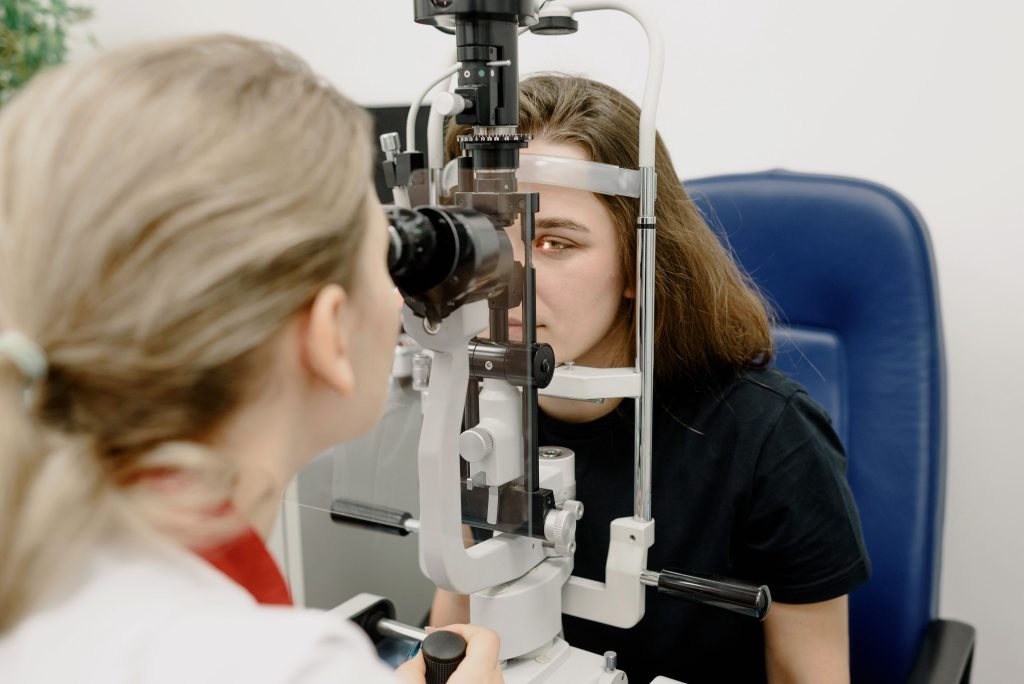
The symptoms can look similar from the patient’s side: blurrier vision, more trouble at night, more squinting. The dividing line a real exam checks is whether the issue is a refractive error correctable by reshaping the cornea or a clouded lens that needs to be replaced. During a comprehensive eye exam, your eye doctor will check your prescription, shine lights into your eyes to check how they focus, and use special drops to dilate your pupils in order to look closely at your lens and retina. You may read an eye chart, get measured for how well your focus lines up, and have your eyes scanned or imaged if necessary. The dilated part of the exam lets the doctor see whether cataracts are present and how advanced they are. Most people find the visit painless and straightforward, and results about whether you need LASIK, cataract surgery, or neither are often available the same day. It’s not something a patient needs to self-diagnose before booking.
Why This Comes Up So Often in Santa Rosa
Santa Rosa and the surrounding wine country have a large population of longtime outdoor workers and retirees, two groups in which this question arises frequently for different reasons. Long-term outdoor sun exposure is a recognized risk factor that can contribute to earlier cataract development, according to the NEI, alongside smoking, diabetes, and prolonged steroid use. At the same time, Sonoma County’s active retiree population means a steady stream of patients in the exact age range where age-related cataracts become common, often years after they’d already considered or had LASIK earlier in life.
The Bottom Line
LASIK and cataract surgery address different problems, are evaluated differently, and are reimbursed differently. LASIK reshapes a healthy cornea to reduce dependence on glasses. Cataract surgery replaces a clouded natural lens to restore vision that’s already been lost. Age, sun exposure, and family history all affect who ends up needing which, but the only reliable way to know which applies to you is a real eye exam, not a guess based on which procedure you’ve heard more about.
Not sure which one applies to you?
A comprehensive eye exam settles it in one visit. If you have any prior eye records or prescriptions, bring those along to help your doctor. Making an appointment is straightforward, and the clinic staff can answer any questions about what to expect or what paperwork you might need.

Frequently Asked Questions
What is the main difference between cataract surgery and LASIK?
LASIK reshapes the cornea to correct nearsightedness, farsightedness, or astigmatism. Cataract surgery removes the eye’s clouded natural lens and replaces it with an artificial one. They treat different parts of the eye and aren’t interchangeable options for the same problem.
Can you get LASIK if you already have cataracts?
Generally no. LASIK is designed for eyes with a stable, healthy natural lens. If a cataract is already present, cataract surgery is the appropriate treatment, and in some cases, a premium intraocular lens placed during that surgery can achieve a similar reduction in glasses dependence.
Is cataract surgery covered by insurance if LASIK isn’t?
Usually, yes. Cataract surgery is typically considered medically necessary and covered by Medicare and most private insurance when a cataract significantly affects vision, per Medicare.gov. LASIK is elective and is almost always paid out of pocket.
Can you have cataract surgery after LASIK?
Yes. A prior LASIK procedure doesn’t prevent future cataract surgery, but it does mean your surgeon needs to account for your corneal history when calculating the new lens power, ideally using your original pre-LASIK measurements.
At what age do most people need cataract surgery?
Cataracts most often develop gradually after age 40 and become significantly more common in later decades; by age 80, more than half of Americans either have a cataract or have already had cataract surgery, according to the National Eye Institute. Individual timing varies based on genetics, sun exposure, and health history.
See also: How Long Does Cataract Surgery Take in Santa Rosa?, Does Medicare Cover Cataract Surgery in Santa Rosa?
About LaserVue Eye Center
LaserVue Eye Center has been the Bay Area’s and Sonoma County’s trusted destination for LASIK, cataract surgery, and premium vision correction since 1996. Our board-certified ophthalmologists have performed thousands of procedures across our San Francisco and Santa Rosa locations, combining advanced surgical technology with the individualized care that brings patients back and earns referrals from their neighbors, colleagues, and physicians. Learn more about our cataract surgery program and meet our surgical team.