


Cataract surgery at LaserVue Eye Center takes about 15 minutes per eye, but the full appointment runs closer to 2–3 hours once you factor in prep, dilation, and post-op monitoring. That gap between “surgery time” and “total time” is what catches most Santa Rosa patients off guard when scheduling around work, childcare, or a ride home. This guide breaks down every phase of the appointment so you know exactly what to block on your calendar, what happens in each room, and what to expect the same day you walk out.
TL;DR — What to Know Before You Book:
- The surgery itself takes 10–20 minutes per eye
- The total appointment (check-in to discharge) is 2–3 hours
- Most patients do one eye at a time, scheduled 1–4 weeks apart
- You cannot drive yourself home, arrange a ride
- Same-day discharge is standard; this is outpatient surgery
How Long Is Cataract Surgery, Actually?
The operating room time for a standard cataract procedure is 10–20 minutes per eye. That number is real, and it surprises most patients who expect something longer, given how significant vision surgery sounds.
What makes the total appointment much longer is everything surrounding the procedure. According to the American Academy of Ophthalmology, cataract surgery is among the most commonly performed surgical procedures in the United States, with more than 4 million procedures performed annually. The efficiency of modern phacoemulsification, the ultrasound technique used to break up and remove the clouded lens, is what makes that 15-minute window possible.
At LaserVue in Santa Rosa, the surgical process itself follows this sequence:
- Topical anesthetic drops numb the eye (no injections for most patients)
- A small incision, typically 2–3mm, is made at the corneal edge
- Phacoemulsification breaks the cataract into microscopic fragments
- Those fragments are suctioned out through the same incision
- The intraocular lens (IOL) is folded and inserted through the incision
- The incision seals without stitches in most cases
That full sequence, start to finish, takes between 10 and 20 minutes for a routine cataract. Complex cataracts, dense, mature, or in eyes with prior surgery, may run longer.
The Full Appointment Timeline at LaserVue Santa Rosa
The 15-minute surgery is part of a much longer appointment. Here is what the full day looks like, phase by phase.
Phase 1: Check-In and Pre-Op Prep (45–60 Minutes)
You arrive at LaserVue 45–60 minutes before your scheduled surgery time. During this phase:
- Staff verify your identity, medications, and allergy history
- Dilating eye drops are administered; dilation takes 20–30 minutes to reach full effect and cannot be rushed
- The surgical eye is marked for confirmation
- An IV line is placed if IV sedation is used (LaserVue uses topical anesthesia plus a mild oral sedative for most patients, but IV access is standard for safety)
- You change into a surgical gown and move to the pre-op area
This phase feels slow because it is mostly waiting for the dilating drops to work. Bring something to listen to — you will not be able to read comfortably once dilation begins.
Phase 2: Surgery (10–20 Minutes)
You move to the operating room. The surgical team confirms your identity and the eye being treated. The procedure begins with anesthetic drops, proceeds through phacoemulsification and IOL implantation, and ends with a brief post-surgical rinse. Most patients report feeling pressure but no pain. The room is quiet, the team talks you through each step, and it ends faster than most patients expect.
Phase 3: Recovery Room Monitoring (30–60 Minutes)
After surgery, you move to a recovery area. LaserVue’s team monitors:
- Blood pressure and vital signs
- Eye pressure (intraocular pressure can spike post-procedure temporarily)
- Your response to anesthesia
- Initial visual acuity in the treated eye
During this phase, vision in the surgical eye is blurry; this is normal. A protective shield is placed over the eye before discharge.
Phase 4: Discharge and Same-Day Instructions (15–20 Minutes)
A nurse or surgical coordinator reviews your post-operative drop schedule, activity restrictions, and the warning signs that warrant a same-day call to the clinic. You receive written instructions, and your prescription drops, if not already filled. You are then discharged to your driver.
Total appointment time: 2–3 hours, with the surgery itself accounting for less than 15% of that window.
| Appointment Phase | Typical Duration |
|---|---|
| Check-in and pre-op prep | 45–60 minutes |
| Surgery (per eye) | 10–20 minutes |
| Recovery room monitoring | 30–60 minutes |
| Discharge instructions | 15–20 minutes |
| Total | 2–3 hours |
Do You Have Both Eyes Done the Same Day?
At LaserVue, the standard protocol is one eye at a time, with the second eye scheduled 1–4 weeks later.
This is not arbitrary caution. The reasons are clinical:
- Safety margin: If a rare complication occurs in the first eye, the surgical team adjusts the technique for the second. Doing both simultaneously eliminates that learning window.
- Infection risk isolation: Endophthalmitis, a rare but serious post-surgical eye infection, affects roughly 0.1% of cataract procedures. If it occurs, sequential scheduling prevents it from affecting both eyes simultaneously.
- Visual adaptation: Your brain adapts to the IOL in the first eye before the second is corrected. This helps the surgeon fine-tune IOL power for the second eye based on your real-world visual result.
Simultaneous bilateral cataract surgery (ISBCS, immediately sequential bilateral cataract surgery) is performed in some settings and some countries, but the American Society of Cataract and Refractive Surgery position is that sequential surgery remains the standard of care in the United States for routine cases.
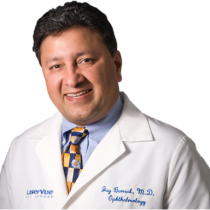
If you are traveling from outside Sonoma County or have a compelling logistical reason, discuss the ISBCS option with Dr. Bansal at your pre-op consultation. He will evaluate your specific risk profile.
What Affects How Long Your Surgery Takes?
Not every cataract is the same, and not every 10-minute estimate applies equally.
Cataract density (nuclear sclerosis grade): Cataracts are graded 1–4 on hardness. A Grade 1–2 cataract breaks up quickly with low phacoemulsification energy. A Grade 4 dense nuclear cataract requires more ultrasound energy and surgical time, sometimes 25–30 minutes.
Prior eye surgery: Eyes that have undergone LASIK, PRK, or retinal surgery may present anatomical variations that require an adjusted technique. These cases routinely take longer and require a surgeon with advanced cataract experience. Dr. Bansal’s background in both refractive and cataract surgery makes him particularly suited to these post-refractive cases.
IOL type selected: Standard monofocal IOLs go in quickly. Premium IOLs, multifocal, extended depth of focus (EDOF), or toric lenses for astigmatism, require more precise centration and may add 5–10 minutes to the procedure.
Pupil dilation: Small pupils (common in patients on certain blood pressure medications, such as tamsulosin) may require additional surgical steps to maintain adequate dilation. Your pre-op team will identify this during your candidacy exam.
Surgeon experience: Volume matters. A surgeon who has performed thousands of cataract procedures operates more efficiently than one doing dozens per year. Dr. Bansal has performed cataract surgeries for more than two decades in Santa Rosa.
Cataract Surgery Duration: LaserVue vs. Hospital Setting
Patients sometimes ask whether having surgery at a hospital outpatient center versus a dedicated ambulatory surgery center (ASC) changes the timeline.
| Factor | Dedicated ASC (LaserVue) | Hospital Outpatient |
|---|---|---|
| Average total appointment | 2–3 hours | 3–5 hours |
| Pre-op wait | 45–60 min | 60–120 min |
| Room turnover efficiency | High (cataract-specialist focus) | Variable |
| OR time per eye | 10–20 min | 10–25 min |
| Discharge speed | Fast | Variable by hospital |
| Parking and access | Dedicated, low-stress | Hospital campus |
Dedicated cataract surgery centers consistently run shorter total appointment times because the entire facility is designed around a single procedure type. At LaserVue’s Santa Rosa location, the staff, equipment, and room flow are all cataract-optimized. That focus translates directly into a faster, less stressful patient experience.
How to Prepare So Your Day Goes Smoothly
The length of your cataract surgery appointment at LaserVue depends partly on how prepared you arrive. These steps eliminate common delays:
Two weeks before surgery: Stop wearing rigid gas-permeable contact lenses (soft contacts: 3 days before). Contact lens wear changes corneal shape and affects IOL power calculations.
One week before surgery: Fill your postoperative eye drop prescriptions. Patients who arrive at discharge without their drops filled add time to the process and risk a gap in their medication schedule.
The day before: Confirm your driver. LaserVue cannot perform surgery without a confirmed post-op driver on file. If you need to reschedule, call at least 48 hours in advance.
Morning of surgery: No eye makeup. Take your regular medications with a small sip of water unless your pre-op nurse instructed otherwise. Arrive 5–10 minutes before your scheduled check-in time, not exactly at it.
What to bring: Photo ID, insurance cards, a list of current medications, and comfortable clothing without a pullover collar (you will be asked to change, and a pullover collar can disturb the eye shield when removing it).
Questions to Ask LaserVue Before Your Cataract Surgery Date
Walking in with these answers speeds up the consent conversation and raises your comfort level.
- “Based on my cataract grade, do you expect my surgery to run on the shorter or longer end of the 10–20 minute range?” Your surgeon’s pre-op measurements give them enough information to answer this honestly.
- “Which IOL are you recommending for me, and does the lens type affect surgical time?” Premium IOL selection affects both the procedure and your expectations for visual outcome.
- “Do any of my current medications affect how my pupil dilates?” Tamsulosin (Flomax) and similar alpha-blockers require an intraoperative floppy iris technique. Your surgeon needs to know this before the OR.
- “What time will my Day 1 follow-up exam be, and can I drive myself to it?” Most patients cannot drive to the Day 1 exam; plan for a second ride if your follow-up is scheduled early in recovery.
- “If I want premium IOL correction for both distance and reading, when do we finalize that decision?” IOL type is locked in before surgery. It cannot be changed on the day.
The Bottom Line on Cataract Surgery Time in Santa Rosa
The surgery is 15 minutes. The appointment is 2–3 hours. Both numbers matter for planning, one for managing anxiety about the procedure itself and the other for logistics on the day.
What you choose not to rush is the decision-making before surgery: your IOL selection, your understanding of the recovery timeline, and your choice of surgeon. LaserVue Eye Center has been performing cataract surgery in Santa Rosa for over 20 years. Dr. Bansal’s team combines the efficiency of a dedicated ambulatory surgery center with a post-operative protocol designed to help patients achieve their best vision as safely as possible.
Ready to get started?
Schedule your free cataract consultation at LaserVue Eye Center in Santa Rosa. Dr. Bansal’s team will assess your cataract grade, calculate your IOL options, and provide a precise appointment timeline tailored to your eyes.

Frequently Asked Questions
Can you do both eyes the same day?
LaserVue’s standard protocol is one eye at a time, with the second eye scheduled 1–4 weeks later. Sequential scheduling reduces infection risk, allows IOL power fine-tuning based on the first eye’s result, and is the standard of care for routine cataract surgery in the United States.
Is cataract surgery painful?
No. Topical anesthetic drops numb the eye before the procedure. Most patients report feeling pressure and mild movement, but no pain, during surgery. A mild oral sedative is typically offered to reduce anxiety. Mild scratchiness and irritation in the hours after surgery are common and resolve within 24–48 hours.
What vision will I have the same day as surgery?
Vision in the surgical eye is blurry immediately after the procedure; this is expected. Many patients notice improved brightness and color saturation within hours as the cataract is gone. Functional vision typically returns within 24–48 hours, with the full visual result stabilizing over 4–6 weeks.
Do I need someone to drive me home from cataract surgery?
Yes. LaserVue requires a confirmed driver before surgery can proceed. The anesthetic eye drops and oral sedative make driving unsafe immediately after surgery, and vision in the treated eye fluctuates significantly on surgery day. Rideshare services are acceptable; keep your eyes shielded and resting during the ride.
How long should I use eye drops after cataract surgery?
Most patients use antibiotic and anti-inflammatory drops for 4 weeks after cataract surgery. LaserVue will provide a specific discharge drop schedule. Using drops exactly as prescribed, not skipping doses or stopping early, is one of the most important factors in a clean, complication-free recovery.
When can I go back to work after cataract surgery?
Most patients with desk jobs return to work within 1–3 days. Jobs requiring heavy lifting, dusty environments, or physical contact require a longer restriction, typically 2–4 weeks. Discuss your specific job requirements with Dr. Bansal at your pre-op consultation.
How do I know if I need cataract surgery?
Common signs include blurry or hazy vision that glasses no longer fully correct, increased glare and halos around lights at night, faded or yellowed color perception, and frequent prescription changes. A comprehensive eye exam at LaserVue confirms the severity of a cataract and whether surgery is the right next step.
See also: What to Expect on Cataract Surgery Day in Santa Rosa | Is Cataract Surgery Safe in Santa Rosa? Understanding Risks and Outcomes
About LaserVue Eye Center
LaserVue Eye Center has been the Bay Area’s and Sonoma County’s trusted destination for LASIK, cataract surgery, and premium vision correction since 1996. Our board-certified ophthalmologists have performed thousands of procedures across our San Francisco and Santa Rosa locations, combining advanced surgical technology with the individualized care that brings patients back and earns referrals from their neighbors, colleagues, and physicians. Learn more about our cataract surgery program and meet our surgical team.