


The human eye is remarkably sensitive. Even a minor scratch on its surface can cause pain, light sensitivity, and blurred vision. Eye scratches, also known as corneal abrasions, are among the most common eye injuries seen by ophthalmologists. According to the American Academy of Ophthalmology (AAO), millions experience corneal abrasions every year, often caused by foreign objects, fingernails, or contact lenses.
LaserVue Eye Center understand that vision is priceless. Our team has dedicated over 25 years to restoring clarity and confidence to thousands of patients throughout the San Francisco Bay Area. If your eye has been scratched or you’re worried about long-term damage, knowing your options for correction is vital.
Understanding a Scratched Eye (Corneal Abrasion)
A corneal abrasion occurs when the clear, protective layer at the front of the eye: the cornea, is scraped or damaged. This can result from minor trauma, like rubbing the eye with a foreign particle, or from serious incidents involving sharp objects.
Symptoms usually appear immediately and may include:
- Sharp or burning eye pain
- Tearing or watery eyes
- Blurred or decreased vision
- Redness and light sensitivity
- The feeling that something is stuck in the eye
Though most small scratches heal naturally, some cases can lead to infection, scarring, or permanent vision problems if untreated.
Common Causes of Eye Scratches
Corneal abrasions can happen unexpectedly during everyday activities. Common causes include:
- Contact lenses are worn too long or not cleaned properly.
- Accidental fingernail or makeup brush contact
- Foreign bodies like dust, sand, or metal shavings
- Eye rubbing after particles enter the eye
- Trauma from sports or outdoor work
Protective eyewear significantly reduces risk, especially for those working in construction, landscaping, or industrial environments.
How Is a Scratched Eye Diagnosed?
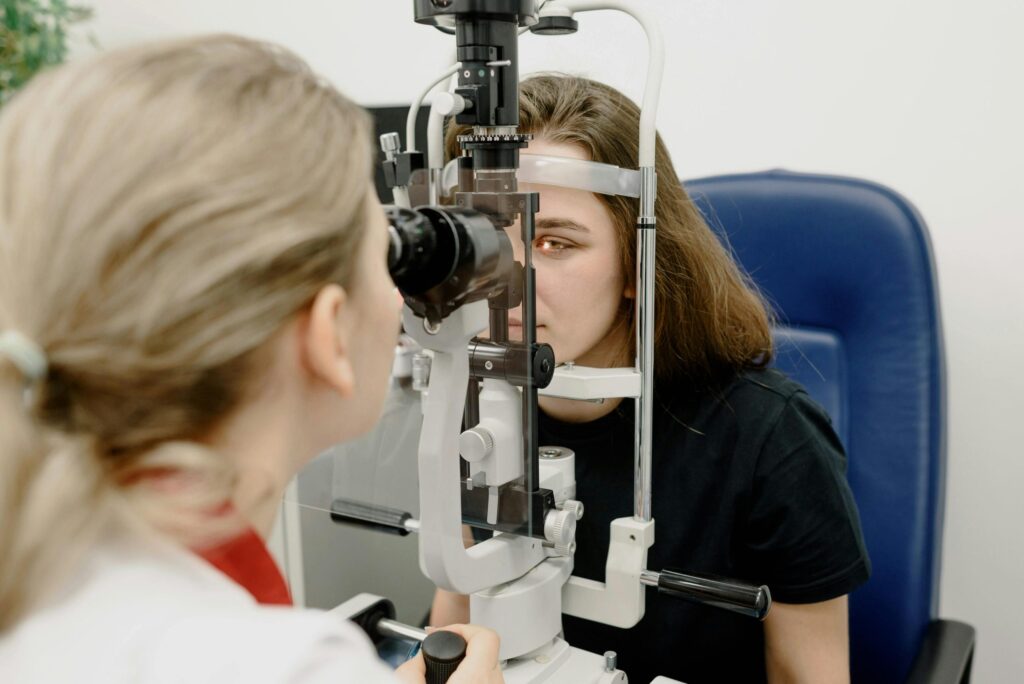
An ophthalmologist uses specialized instruments to examine the cornea under magnification. They may apply fluorescein dye, a harmless orange-yellow stain, that highlights scratches under blue light.
This process allows the doctor to assess the depth, size, and severity of the abrasion. In some cases, additional imaging or visual acuity testing helps determine whether deeper corneal layers are affected.
Accurate diagnosis ensures the right treatment is provided promptly, minimizing the risk of infection or scarring.
Can Damage to the Eye From a Scratch Be Corrected?
Yes. In most cases, corneal scratches heal on their own with proper medical care. The cornea is one of the fastest-healing tissues in the human body.
Minor abrasions typically resolve within 24 to 72 hours. However, deeper scratches may require medical treatment, such as antibiotic drops, steroid medication, or protective contact lenses known as bandage lenses.
In rare cases where scarring affects vision, laser corrective procedures or corneal transplants can restore clarity. Treatments are determined based on the location and depth of the injury.
Treatment Options for Corneal Abrasions
The treatment plan depends on the severity of the scratch. Most patients recover with:
- Antibiotic eye drops or ointments to prevent infection
- Lubricating drops to reduce discomfort and aid healing
- Bandage contact lenses to protect the cornea during recovery
- Anti-inflammatory medication to minimize swelling and pain
For deeper or recurring abrasions, advanced procedures may be recommended. Phototherapeutic keratectomy (PTK), a laser technique approved by the U.S. Food and Drug Administration (FDA), removes damaged corneal tissue and smooths irregular surfaces for improved vision.
Advanced Vision Correction After Eye Injury
If your vision remains blurry after a corneal injury, advanced corrective treatments may help. Modern laser vision correction procedures like LASIK or PRK can safely reshape the cornea once it has healed completely.
Patients with scarred or irregular corneas may benefit from corneal cross-linking or custom laser treatments designed to improve visual clarity and stability. These procedures restore light focus, reduce glare, and improve overall visual performance.
Consulting a board-certified ophthalmologist ensures the right approach for long-term visual restoration.
The Healing Process: What to Expect
Healing time depends on the depth of the abrasion. Superficial scratches often heal within days, while deeper injuries may require weeks.
During recovery:
- Avoid rubbing or touching your eyes.
- Use prescribed eye drops as directed.
- Refrain from wearing contact lenses until approved by your doctor.
- Protect your eyes from bright light and wind.
Follow-up appointments are essential to confirm proper healing and prevent recurrence.
The Importance of Early Treatment
Prompt medical attention is vital in preventing long-term vision loss. According to the American Optometric Association (AOA), untreated corneal abrasions can lead to corneal ulcers or permanent scarring.
If pain, tearing, or blurred vision persists, immediate evaluation by an ophthalmologist is crucial. Early treatment provides faster healing and better protection for your vision.
When to Seek Emergency Care
Seek emergency eye care immediately if you experience:
- Severe eye pain or light sensitivity
- Decreased or distorted vision
- A visible white spot on the cornea
- Eye discharge or swelling
- The sensation of a foreign object that won’t go away
These symptoms may indicate infection or more serious corneal damage requiring urgent attention.
Protect Your Vision Today!
If you’ve suffered a scratched eye or notice lasting vision problems, professional help is available. Schedule a consultation with LaserVue Eye Center today. Our expert ophthalmologists combine advanced technology with compassionate care to restore and protect your vision.
With over 25 years of excellence and 40,000 successful procedures, your eyes are in the safest hands possible.
Frequently Asked Questions
1. What happens when your eye gets scratched?
A scratched eye, or corneal abrasion, damages the cornea’s surface layer. It often causes pain, tearing, and light sensitivity. Most heal quickly with medical care, but deeper injuries need professional treatment.
2. Can a scratched eye heal on its own?
Minor scratches often heal naturally within two to three days. The cornea regenerates rapidly if kept clean and protected. Deep or infected abrasions require professional intervention to avoid permanent damage.
3. How do doctors diagnose a corneal scratch?
Doctors use fluorescein dye and blue light to detect abrasions on the cornea. This highlights damaged areas clearly for evaluation. Eye exams ensure proper treatment and prevent complications.
4. Can vision be restored after a severe corneal scratch?
Yes, vision can often be restored through advanced treatments. Depending on injury severity, laser correction or corneal transplants may help. Early medical care improves long-term visual outcomes.
5. How long does it take for a scratched eye to heal?
Superficial scratches usually heal in 24 to 72 hours. Deep scratches may take longer, depending on severity. Proper care and medication accelerate recovery and prevent infection.
6. What should I avoid doing if my eye is scratched?
Avoid rubbing or touching your eyes. Do not wear contact lenses until cleared by your doctor. Keep your eyes clean and protected from debris or bright light.
7. Are there long-term effects from a corneal scratch?
Most patients recover fully, but some develop corneal scars or recurrent erosion. Persistent symptoms need ophthalmologic evaluation. Prompt care ensures optimal healing and vision preservation.
8. When should I see a doctor for an eye scratch?
Seek medical attention if you experience severe pain, blurred vision, or light sensitivity. These symptoms indicate deeper injury. Early diagnosis prevents complications like infection or scarring.
9. What treatments are available for corneal abrasions?
Treatment options include antibiotic drops, lubricants, and protective contact lenses. Severe cases may benefit from laser procedures like PTK. Medical supervision ensures complete healing and safety.
10. Can I get laser vision correction after an eye scratch?
Yes, laser vision correction may be possible after complete healing. Procedures like LASIK or PRK improve clarity and reduce scars. A thorough evaluation determines suitability for treatment.