


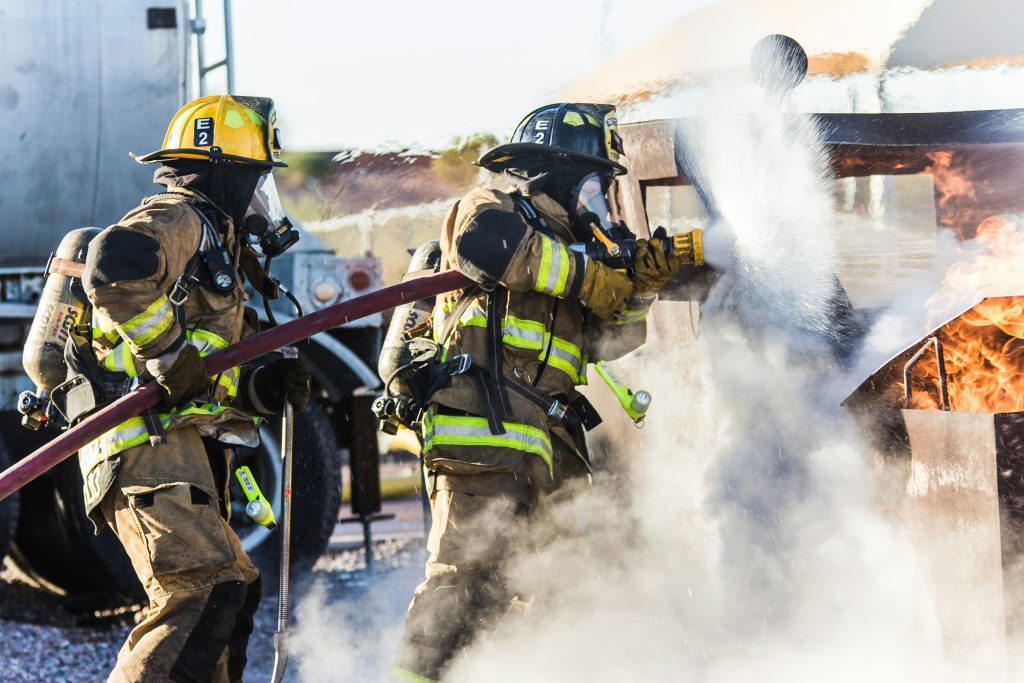
A firefighter pulling on an SCBA mask has about two seconds to get a clean seal. A sheriff’s deputy running a foot pursuit through a vineyard at night doesn’t get to stop and push glasses back up their nose. A paramedic pulling someone out of a car on Highway 101 in the rain can’t afford fogged lenses at the exact moment they need to see a pupil response.
For Santa Rosa’s first responders, vision isn’t a convenience. It’s operational equipment, and equipment that fails at the wrong moment carries real consequences. This is why LASIK has become a routine, department-endorsed consideration for police officers, firefighters, and paramedics rather than a personal cosmetic choice. This piece examines why corrected vision matters so much in emergency work, what the research says about LASIK’s suitability for physically demanding jobs, and what Santa Rosa-area first responders should know before scheduling a consult.
TL;DR
- Glasses and contacts introduce specific, documented failure points in first-responder environments: fogging, dislodging, debris, and PPE conflicts.
- Corrected visual acuity requirements exist for a reason in physically demanding, high-stakes roles.
- LASIK candidacy evaluation is not different for first responders, but recovery-window planning around shift schedules is.
- Santa Rosa’s wildfire, structure fire, and rural response conditions raise the stakes on eyewear reliability specifically.
- Most departments do not require LASIK, but many officers and firefighters pursue it after understanding the operational trade-offs.
Why Vision Reliability Is a Job Requirement, Not a Preference
Every first-responder role has a baseline vision standard, whether corrected or uncorrected, because the job assumes clear sight under conditions where stopping to fix an eyewear problem isn’t an option.
The distinction that matters here is between “correctable to 20/20” and “reliably clear in the field.” Glasses and contacts can help someone achieve 20/20 vision in a controlled eye exam. They do not reliably deliver that same clarity during a structure fire, a physical altercation, or an ambulance call in the rain. That gap between exam-room correction and field-condition correction is the real argument for LASIK in these roles.
The Specific Failure Points of Glasses and Contacts on the Job
Fogging and PPE Conflicts
Firefighters wearing SCBA masks over glasses face a well-known problem: the mask seal and the glasses’ arms compete for the same space on the face, and the heat and humidity inside the mask fog the lenses quickly. According to NFPA, this is a recognized issue that departments train around, rather than treat as rare.
Dislodging During Physical Response
Foot pursuits, physical arrests, and rescue extractions all involve sudden movement, contact, and impact, exactly the conditions where glasses shift, fall off, or break and where contacts can dislodge or dry out mid-task.
Dust, Smoke, and Debris
Wildland-urban interface fires, common in Sonoma County terrain, produce heavy particulate exposure. Contact lens wearers are more prone to irritation and forced blinking under these conditions, at the exact moment sustained visual attention matters most.
Low-Light and Night Operations
Glasses glare under flashlights and vehicle headlights; this is a practical, frequently reported issue rather than a rare edge case.
What the Research Says About LASIK Outcomes in Physically Demanding Roles
LASIK’s core appeal for first responders isn’t cosmetic. It’s operational: removing a piece of equipment that can fail, fog, or dislodge at the worst possible time. According to the American Academy of Ophthalmology, refractive surgery has been evaluated and, in some cases, actively supported for personnel in physically demanding, vision-critical roles, precisely because uncorrected reliability under stress and exertion carries operational value.
Original analysis: the case for LASIK in first-responder work isn’t that it makes vision better than glasses on a chart. It’s that it removes a variable entirely: no fogging, no slipping, and no case to protect during a call at the exact moments when a distracted half-second matters most.
Comparison: Glasses, Contacts, and LASIK Under First-Responder Conditions
| Condition | Glasses | Contacts | LASIK (post-recovery) |
|---|---|---|---|
| SCBA / PPE mask seal | Interferes with seal, fogs | No interference, but dry/dislodge risk | No interference |
| Foot pursuit / physical contact | Can fall off or break | Can dislodge | Not a factor |
| Smoke, dust, debris exposure | Can smear, limited protection | Higher irritation risk | Not a factor |
| Low-light / night operations | Glare from lights | Minimal glare | Minimal glare |
| Water rescue / rain exposure | Fogs, water spots | Risk of loss | Not a factor |
| Ongoing cost and maintenance | Recurring | Recurring, higher due to replacement | One-time cost, no recurring lenses |
Recovery Planning Around Shift Work
The clinical LASIK evaluation and procedure itself are not different for a first responder than for any other candidate. What is different is scheduling the recovery window around shift patterns, given how physically demanding the return is.
Typical return-to-duty scenarios include desk or administrative work after about 48 hours, with most first responders cleared for light, non-hazardous duties within 3 to 4 days, depending on the provider’s evaluation. Full return to active duty, including exposure to smoke, debris, physical exertion, or tactical requirements such as SCBA or firearms qualification, often occurs around 1 to 2 weeks post-procedure, following a follow-up exam to confirm stable healing. For example, a firefighter might schedule surgery at the start of a scheduled week off, planning to resume full-response calls at the end of that break. Officers heading into academy or qualification windows often plan LASIK at least 2 weeks in advance of high-impact activities. Individual timelines can vary based on healing rates and provider recommendations, so personalized planning with both the healthcare provider and the department scheduling officer is essential.
Departments and individual officers should coordinate procedure timing around scheduled time off, qualification dates, and any physical testing requirements, rather than assume a standard civilian recovery timeline applies without adjustment.
What to Expect at a LASIK Consultation as a First Responder
A consult evaluates the same core criteria for every candidate: corneal thickness, prescription stability, overall eye health, and pupil size, among other factors. Candidacy itself does not change based on occupation. What does change is the conversation around the timeline: a consult with a provider familiar with first-responder scheduling can help sequence the procedure around academy dates, qualification cycles, or peak fire season, rather than leaving that planning to chance.
Going into your consult prepared can make the process smoother and more productive. First responders should consider bringing a copy of their upcoming shift schedule, any known vacation days or major assignments, and the dates of any scheduled academy work, qualification tests, or intense physical requirements. Having these details on hand helps the provider recommend the safest, most practical procedure timing. It’s also helpful to write down any questions about duty restrictions during recovery, expected downtime, and when you’ll be cleared to wear PPE or return to high-exposure environments. This ensures the consult covers not just your candidacy but also your operational needs.
Curious whether you’re a candidate?

Frequently Asked Questions
Do police and fire departments require LASIK?
No, public safety departments do not require LASIK. Instead, they enforce strict minimum uncorrected and corrected visual acuity standards for field safety. Many recruits and active personnel choose LASIK as a reliable, long-term method to safely meet these rigorous civil service vision benchmarks.
Will LASIK disqualify me from an academy or fitness test if I need time to recover?
LASIK itself will not disqualify you, but your active recovery timeline might. Most departments enforce a mandatory post-operative waiting period of six weeks to three months before allowing defensive tactics or heavy physical training. You must plan your surgery around academy start dates to avoid administrative deferrals.
Is LASIK safe for people who regularly wear tactical or SCBA gear?
Yes, once your cornea is completely healed, LASIK poses no long-term restrictions on personal protective equipment. The structural integrity of the eye is unaffected, making it completely safe to wear tightly fitted SCBA masks, tactical helmets, or protective eyewear without risking flap displacement or pressure issues.
See also: Cataract Surgery vs. LASIK in Santa Rosa: What’s the Difference? Is There a “Best Age” for LASIK in Santa Rosa?
About LaserVue Eye Center
LaserVue Eye Center has been the Bay Area’s and Sonoma County’s trusted destination for LASIK, cataract surgery, and premium vision correction since 1996. Our board-certified ophthalmologists have performed thousands of procedures across our San Francisco and Santa Rosa locations, combining advanced surgical technology with the individualized care that brings patients back and earns referrals from their neighbors, colleagues, and physicians. Learn more about our cataract surgery program and meet our surgical team.