


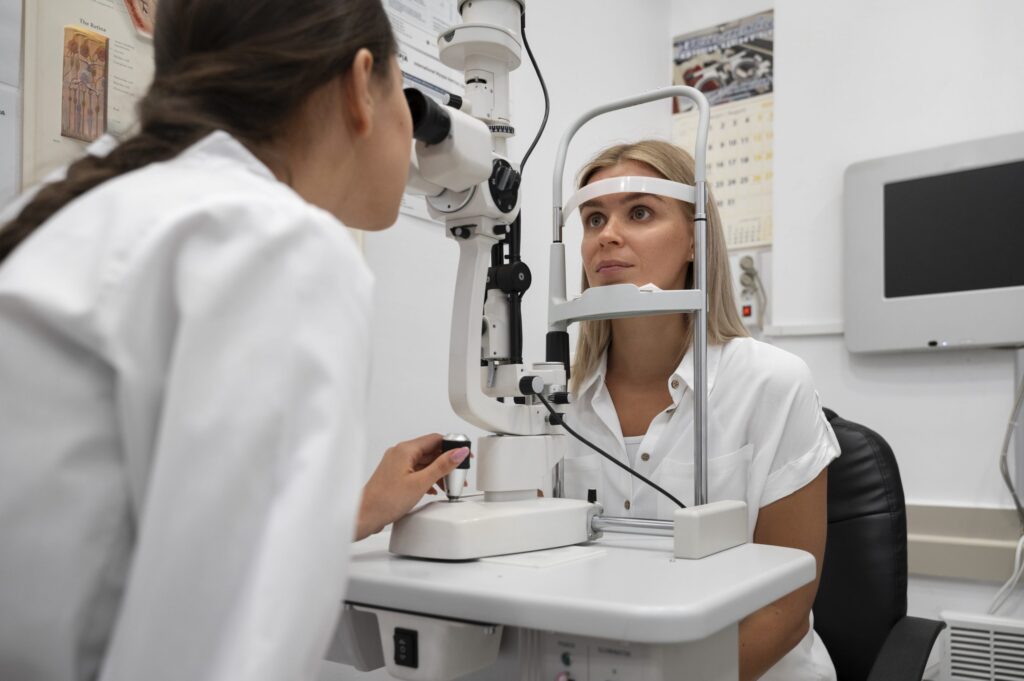
Keratoconus is a progressive eye condition that affects the cornea. The clear front part of the eye. When the cornea weakens and begins to thin, it gradually bulges outward into a cone-like shape. This distortion impacts how light enters the eye, resulting in blurred or distorted vision.
At LaserVue Eye Center, we understand how deeply vision impacts your quality of life. For over 25 years, our specialists have been helping patients overcome complex corneal disorders like keratoconus with compassion and cutting-edge care.
Understanding Keratoconus and Its Impact
Keratoconus usually begins during adolescence or early adulthood and progresses over several years. The exact cause remains unclear, but genetics, eye rubbing, and environmental factors may contribute.
As the cornea changes shape, patients often experience:
- Increased sensitivity to light and glare
- Frequent changes in eyeglass prescriptions
- Blurred or distorted vision
- Eye strain or headaches
In advanced stages, traditional glasses or contact lenses may no longer provide adequate correction. That’s where new treatments for keratoconus can make a profound difference.
The Evolution of Keratoconus Treatment
In the past, treatment options for keratoconus were limited to rigid contact lenses or corneal transplants in severe cases. Today, innovative technologies and medical advancements are transforming how doctors manage this condition.
Modern keratoconus treatments aim to slow progression, improve vision, and preserve natural corneal tissue. At LaserVue Eye Center, our goal is to customize every treatment plan to the patient’s unique corneal structure and vision goals.
Corneal Cross-Linking: Strengthening the Foundation
One of the most significant breakthroughs in keratoconus treatment is corneal cross-linking (CXL). This minimally invasive procedure strengthens the cornea by using riboflavin (vitamin B2) eye drops and controlled ultraviolet light exposure.
During the procedure, the riboflavin solution penetrates the corneal tissue. When activated by UV light, it creates new collagen bonds that stabilize the cornea. This process halts further progression of keratoconus in most patients.
Cross-linking is typically performed under topical anesthesia, and recovery time is relatively short. Many patients can resume normal activities within a few days.
Custom Contact Lens Technology
For patients with mild to moderate keratoconus, custom contact lenses can significantly improve vision. Modern designs, including scleral lenses, provide enhanced stability and comfort compared to traditional lenses.
Scleral lenses rest on the white part of the eye (the sclera) and vault over the cornea, creating a tear-filled space that smooths irregularities. This design provides clearer, more stable vision and superior comfort throughout the day.
Topography-Guided Photorefractive Keratectomy (PRK)
For select patients, topography-guided PRK may be used to improve corneal shape and enhance visual quality. This treatment reshapes the surface of the cornea using precise laser energy guided by corneal imaging data.
When combined with corneal cross-linking, PRK can both stabilize and improve vision for keratoconus patients. It’s an innovative approach for those whose corneal structure is strong enough for surface laser treatment.
Implantable Collamer Lenses (ICL)
For patients whose corneas are too thin or irregular for laser surgery, implantable collamer lenses offer an excellent alternative. ICLs are placed behind the iris and in front of the natural lens, providing sharp, stable vision without removing corneal tissue.
ICL technology is ideal for keratoconus patients who need significant vision correction and want to reduce dependence on glasses or contacts. The lenses are removable and reversible, offering flexibility if vision needs change in the future.
At LaserVue Eye Center, we evaluate each patient’s corneal thickness, topography, and visual requirements before recommending this option.
Corneal Transplantation: For Advanced Keratoconus
In cases where keratoconus has progressed too far for other treatments, corneal transplantation may be necessary. This involves replacing the damaged cornea with healthy donor tissue.
Modern surgical techniques, such as deep anterior lamellar keratoplasty (DALK) allow surgeons to replace only the affected layers while preserving the healthy inner corneal tissue. This reduces the risk of rejection and speeds recovery.
Thanks to advances in surgical precision and postoperative care, corneal transplant success rates are higher than ever.
The Role of Early Diagnosis
Early diagnosis is critical in managing keratoconus effectively. Regular eye exams and corneal mapping can detect subtle changes before symptoms become severe.
At LaserVue Eye Center, we use advanced diagnostic tools such as corneal topography, pachymetry, and wavefront analysis to identify and monitor keratoconus at its earliest stages.
Living Well with Keratoconus
With proper care and the latest treatments, most patients can enjoy clear, stable vision for years to come.
Avoiding excessive eye rubbing, using prescribed drops, and following your doctor’s instructions are simple ways to protect your cornea. Regular follow-ups ensure your treatment continues to deliver the best results possible.
At LaserVue Eye Center, we are dedicated to walking with you every step of the way, from diagnosis to recovery and beyond.
Take Control of Your Vision!
If you’ve been diagnosed with keratoconus or are experiencing vision changes, don’t wait to seek expert care. Early intervention can make all the difference in preserving your sight.
Schedule your consultation with LaserVue Eye Center today to learn more about new treatments for keratoconus. Our experienced surgeons and dedicated team are ready to help you see the world with confidence again.
Frequently Asked Questions
1. What are the latest keratoconus treatments available in the San Francisco Bay Area?
The latest keratoconus treatments include corneal cross-linking, scleral lenses, and topography-guided laser procedures. These advanced options strengthen the cornea and improve vision clarity. Many Bay Area clinics now use FDA-approved cross-linking to slow or stop disease progression.
2. How does corneal cross-linking help treat keratoconus?
Corneal cross-linking uses ultraviolet light and riboflavin drops to strengthen weakened corneal tissue. This treatment stabilizes the cornea and prevents further thinning. It is often recommended for patients in early or moderate stages of keratoconus.
3. Are there non-surgical treatments for keratoconus?
Yes, non-surgical treatments include custom contact lenses such as scleral or hybrid lenses. These lenses correct irregular corneal shapes for sharper vision. They are ideal for patients not yet ready for surgical intervention.
4. What is topography-guided laser treatment for keratoconus?
Topography-guided laser treatment reshapes the cornea based on detailed eye mapping. It improves visual sharpness by addressing irregularities caused by keratoconus. This advanced technology enhances both safety and precision in treatment outcomes.
5. When should someone consider a corneal transplant for keratoconus?
A corneal transplant is considered when vision cannot be corrected with lenses or less invasive methods. It replaces the damaged corneal tissue with a healthy donor cornea. This option is typically reserved for severe or advanced cases.
6. How effective is corneal cross-linking in stopping keratoconus progression?
Corneal cross-linking is highly effective, with studies showing over 90% success in halting progression. Most patients maintain stable vision for many years after treatment. It is now considered the gold standard for early-stage keratoconus management.
7. Can keratoconus be treated permanently?
While there is no complete cure, modern treatments can stop its progression and restore functional vision. Procedures like cross-linking and advanced lens fittings offer long-term stability. Early detection remains key to preventing severe vision loss.
8. How do scleral lenses improve vision for people with keratoconus?
Scleral lenses create a smooth optical surface over the irregular cornea, greatly improving visual clarity. They also keep the eyes hydrated and comfortable throughout the day. Many patients report sharper vision and enhanced comfort compared to traditional contacts.
9. What are the early signs of keratoconus that should not be ignored?
Early signs include frequent changes in eyeglass prescriptions, distorted vision, and light sensitivity. Some people notice ghosting or double vision in one eye. Detecting these symptoms early allows for faster and more effective treatment options.
10. How can patients in the Bay Area find advanced keratoconus care?
Patients can consult local ophthalmologists specializing in corneal diseases and refractive surgery. Many Bay Area clinics now offer state-of-the-art diagnostic tools and cross-linking systems. Choosing an experienced provider ensures accurate diagnosis and personalized treatment planning.